
 English
 中文简体







Anhui Juhong Electrical Technology Co., Ltd. covers an area of 12,000 square meters, with fixed assets of 50 million RMB and over 150 employees, including more than 20 technical personnel and 2 professional engineers. We are professional AC Motor Manufacturer and Custom AC Motor factory in China.
Juhong Motor is equipped with comprehensive production facilities, featuring advanced domestic industry-leading equipment such as multiple closed double-point high-speed precision presses, automatic winding insertion machines, electronic aluminum casting machines, and other production equipment under advanced production conditions. The annual production capacity reaches 4 million household motors and 500,000 other types of motors.
In addition, the company scientifically implements TQM and 6S on-site management models. It is one of the first electromechanical manufacturing enterprises in the industry to achieve ISO9001, ISO14001, and OHS18001 certifications, while also obtaining mandatory certifications such as CCC, UL, CE, and TUV. The company holds 9 utility model patents and 2 invention patents. Over the years, the "Juhong Brand" series of motors have achieved a 100% pass rate in spot checks conducted by national, provincial, and municipal quality inspection centers, with technical performance reaching industry-leading levels, earning widespread customer acclaim and praise.
Anhui Juhong Electrical Technology Co., Ltd. possesses strong technical capabilities, sophisticated equipment, advanced manufacturing processes, and comprehensive testing methods. The company applies new technologies and new processes to develop new projects. To meet the demands of both domestic and international markets, all employees will continue to uphold the corporate spirit of "excellence in craftsmanship" and "quality-driven success," striving to provide society with "first-class products, first-class quality, and first-class service." We sincerely welcome domestic and international customers, as well as partners from all sectors, to engage in sincere cooperation for mutual development!
AC Motor Manufacturer
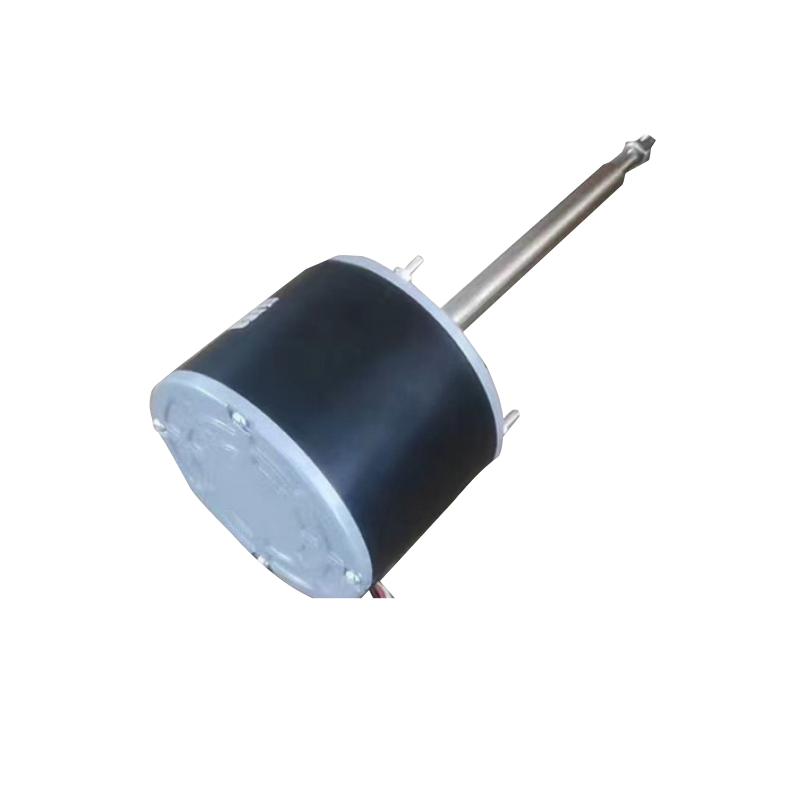
The AC motor is an indispensable key power device in the industrial and civilian fields, and is widely used in air-conditioning systems, ventilation equipment, air purifiers, industrial exhaust fans and various cooling devices. This series of products uses AC power as the driving source, has stable operating performance and efficient energy conversion capabilities, and can maintain low vibration, low noise and high reliability under long-term working conditions. The fan series motor has a compact structure and scientific design, and is suitable for a variety of fan impeller types to meet application scenarios with different air volume and pressure requirements. This series of products supports a variety of power specifications and speed levels, making it easy for users to choose according to specific needs. With its strong durability, energy-saving and high efficiency, and easy maintenance, the AC motor has demonstrated excellent performance in industrial plants, commercial buildings and home environments, becoming the core power guarantee for ventilation and air flow systems.
Anhui Juhong Electrical Technology Co., Ltd. builds AC motors for fans, ventilation and airflow-driven equipment at our plant in the Langxi Economic Development Zone, Xuancheng City, Anhui. As an AC Motor manufacturer in China, we supply fan-driven induction motors for air-conditioning systems, ventilation equipment, air purifiers, industrial exhaust fans and cooling devices, produced on a 12,000 m² site with an annual capacity of 4.5 million motors.
Our work starts with the driven assembly rather than a catalogue wattage: impeller type, air volume and static pressure, shaft speed, mounting interface and the customer's control architecture. From that working point we fix the motor frame, winding, shaft and terminal arrangement, then confirm it through sample validation before series production.
What Our AC Motor Range Covers
The AC motor series uses an AC supply as the driving source and is engineered for stable running, efficient energy conversion, low vibration and low noise across long working hours. The fan-driven design keeps the frame compact while matching a range of impeller types, so one motor family covers installations with different air volume and pressure demand.
Airflow projects rarely need a single motor type, so the surrounding fan families sit alongside this range: fan motors for axial and centrifugal impellers, cooling fan motors for condenser and equipment cooling duties, extractor hood motors, waterproof motors for moisture-exposed installations and tubular motors for concealed drives.
Range and Application Fit
| Motor family | Typical driven equipment | Design focus | Configuration variables |
|---|---|---|---|
| AC Motor range — Energy-Saving Fan Driven AC Motor | Air-conditioning fan sections, ventilation units, air purifiers, cooling devices | Efficient conversion at steady fan duty, low vibration and noise over long running hours | Output and speed step, shaft diameter and length, mounting bracket or flange, capacitor rating |
| Fan Motor | Axial and centrifugal impellers in appliances and light commercial air movement | Stable airflow at continuous duty, acoustic control | Stack length, speed taps, lead length, mounting feet |
| Cooling Fan Motor | Condenser and evaporator fans, cabinet and equipment cooling | Thermal endurance where airflow around the frame is restricted | Insulation and temperature-rise margin, terminal type, rotation sense |
| Extractor Hood Motor | Kitchen extractor hoods and compact exhaust units | Airflow against moderate static pressure, compact installation depth | Single or twin fan arrangement, mounting plate, speed selection |
| Special Type and Waterproof Motors | Application-specific drives, humid or wash-down positions | Duty and environment matched to the stated working conditions | Sealing and protection requirements, winding system, cable entry |
Application Engineering: Matching the Motor to the Airflow System
The working point decides the motor. A centrifugal fan operating against high static pressure needs a different torque–speed characteristic from a low-pressure axial fan of the same nominal wattage, and rated speed must be quoted at the motor shaft, not the impeller.
Mechanical power follows P = 2πnT/60, so 0.25 kW at 1,300 rpm corresponds to roughly 1.8 N·m of shaft torque. Raising speed at constant torque increases the load, and increasing impeller diameter at constant speed raises it further. We review that relationship before proposing a power step.
- Impeller type, diameter and inertia reflected to the motor shaft
- Required air volume and static pressure at the design point
- Driven speed, transmission ratio and belt or direct coupling
- Supply voltage, frequency and phase at the installation site
- Starting method, capacitor rating and permissible starts per hour
- Duty cycle, ambient temperature and airflow around the frame
- Sound and vibration targets for the finished appliance
Critical Specifications Confirmed Before Quotation
Every order runs against a frozen specification sheet and outline drawing. The variables below are agreed with the customer before tooling, winding or sample build begins.
- Electrical: rated voltage and frequency, output, pole count and synchronous speed, capacitor value, connection and terminal marking
- Mechanical: shaft diameter and extension length, keyway or flat, mounting bracket, flange or resilient base, overall envelope and weight
- Thermal: insulation class, temperature-rise limit, duty rating and ambient assumption
- Acoustic: bearing type, rotor balance, vibration and sound limits measured at the agreed points
- Interface: lead length and gauge, connector or plug type, rotation sense viewed from the drive end
Winding, Materials and Build
Stator and rotor cores are produced on closed double-point high-speed precision presses, winding is inserted on automatic winding insertion machines, and rotors are cast on electronic aluminium casting machines. This sequence keeps slot fill, winding symmetry and air gap consistency stable from the first unit to the last.
Copper and aluminium winding options are both quoted, with the choice confirmed against duty cycle, thermal margin and the customer's cost target instead of being assumed. Shaft machining, bearing seating and rotor balancing determine the vibration behaviour of the finished motor, so those steps are controlled with the same attention as the electrical build.
Controls, Protection and Automation Integration
Fan-driven AC motors are usually supplied with a run capacitor, fixed speed taps or a single rated speed. Where the appliance uses electronic speed control, we align the motor's speed–torque behaviour with the drive or controller the customer has specified.
- Capacitor start or permanent-split capacitor configurations
- Thermal protector embedded in the winding where the application requires it
- Lead wire, terminal block or plug-in connector to suit the appliance harness
- Protection level reviewed against the mounting position and moisture exposure
- Speed adjustment through taps, voltage control or an external inverter drive
Quality Control and Acceptance
ISO9001, ISO14001 and OHSAS18001 systems cover development, material procurement, production control, shipment inspection and after-sales service. We comply with CCC, UL, CE and TUV requirements and hold eleven patents, nine utility model and two invention. Spot checks on Juhong Brand motors by national, provincial and municipal quality inspection centres have returned a 100% pass rate.
- Incoming inspection of laminations, wire, bearings, capacitors and housings
- In-process control of winding, insertion, casting and assembly stations under TQM and 6S discipline
- Sample and first-article validation against the frozen drawing before series release
- Routine electrical checks, no-load running at rated voltage, and dimensional and visual inspection
- Packaging inspection matched to the agreed transport and labelling requirement
Installation, Maintenance and Spare Parts
Fan-driven AC motors mount on a bracket, flange or resilient base, and correct alignment, unobstructed airflow around the frame and a correctly rated capacitor keep current draw and temperature rise within design values. Rotation sense and terminal marking are confirmed at order stage so the electrical connection is unambiguous on the line.
- Periodic check of bearing noise, shaft end play and running current
- Capacitor replacement at the specified rating, never a substituted value
- Cleaning of the cooling path and removal of lint or dust from the frame
- Inspection of leads, terminals and mounting fasteners for looseness or heat marking
- Replacement stators, rotors, capacitors and hardware available through motor spare parts for service programmes
Information We Use to Configure Your Solution
We prepare a configuration and quotation from the application data below. Where a value is still open, we propose a working assumption and mark it for confirmation rather than leaving the choice to the order stage.
- Driven assembly drawing, impeller type and mounting interface
- Required air volume, static pressure and the motor speed that achieves them
- Supply voltage, frequency, phase and control method
- Rated output, starting condition and duty cycle, including starts per hour
- Ambient temperature, moisture exposure and installation position
- Shaft, flange, lead, connector and rotation requirements
- Sound and vibration limits for the finished appliance
- Approval and marking requirements for the destination market
- Annual volume, packaging, labelling and delivery schedule
Frequently Asked Questions
What AC motors does Juhong supply in this range?
We manufacture fan-driven AC induction motors for air-conditioning systems, ventilation equipment, air purifiers, industrial exhaust fans and cooling devices, supported by fan motors, cooling fan motors, extractor hood motors, waterproof motors and tubular motors from the same production base.
Can you match a motor to a specific impeller and air volume?
Yes. Send the impeller drawing, the required air volume and static pressure, and the speed at which the fan must run. We convert that into a shaft torque and speed requirement, then select the frame, winding and capacitor combination that meets it.
Which supply voltages, speeds and power steps are available?
The fan-driven AC motor series supports multiple power specifications and speed levels. Voltage, frequency, pole count and output are confirmed per project against the destination market's supply conditions and the appliance's control method.
How is a new OEM motor validated before series production?
We freeze the specification sheet and outline drawing, build samples against them, and validate electrical performance, no-load running, dimensional fit and mounting behaviour with the customer. Series release follows approval of that sample stage.
What certification evidence accompanies our motors?
Our management systems hold ISO9001, ISO14001 and OHSAS18001 certification, and the company complies with CCC, UL, CE and TUV requirements. The applicable approval for a specific model is agreed at quotation stage according to the destination market.
What spare parts and service support do you provide?
Stators, rotors, capacitors, bearings and mounting hardware are available for service programmes, with the original build specification held for repeat orders. Installation guidance, terminal and capacitor data, and maintenance intervals are supplied with the motor documentation.
No.6 Wuyashan Road, Langxi Economic Development Zone, Xuancheng City, Anhui, China
+86-563-7370081
