
 English
 中文简体
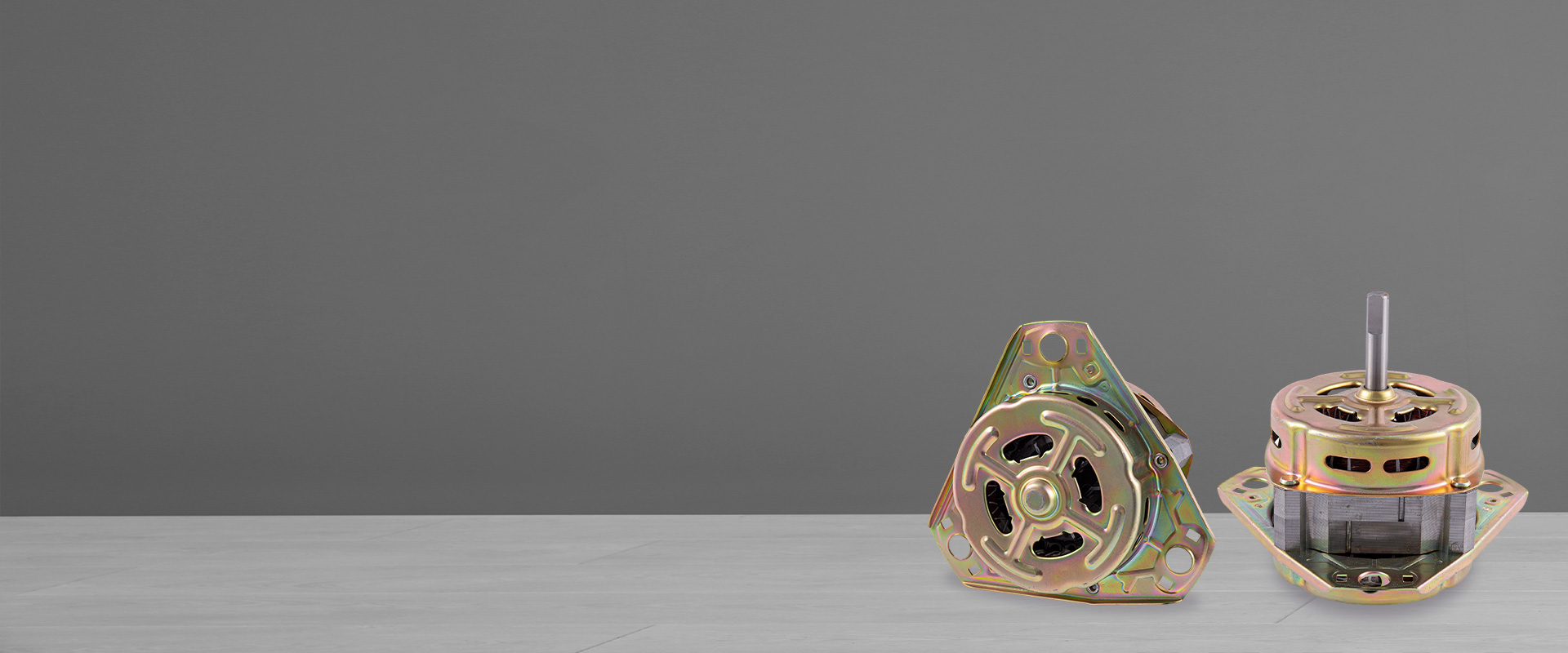







Anhui Juhong Electrical Technology Co., Ltd. covers an area of 12,000 square meters, with fixed assets of 50 million RMB and over 150 employees, including more than 20 technical personnel and 2 professional engineers. We are professional Grinding Machine Motor Manufacturer and Custom Grinding Machine Motor factory in China.
Juhong Motor is equipped with comprehensive production facilities, featuring advanced domestic industry-leading equipment such as multiple closed double-point high-speed precision presses, automatic winding insertion machines, electronic aluminum casting machines, and other production equipment under advanced production conditions. The annual production capacity reaches 4 million household motors and 500,000 other types of motors.
In addition, the company scientifically implements TQM and 6S on-site management models. It is one of the first electromechanical manufacturing enterprises in the industry to achieve ISO9001, ISO14001, and OHS18001 certifications, while also obtaining mandatory certifications such as CCC, UL, CE, and TUV. The company holds 9 utility model patents and 2 invention patents. Over the years, the "Juhong Brand" series of motors have achieved a 100% pass rate in spot checks conducted by national, provincial, and municipal quality inspection centers, with technical performance reaching industry-leading levels, earning widespread customer acclaim and praise.
Anhui Juhong Electrical Technology Co., Ltd. possesses strong technical capabilities, sophisticated equipment, advanced manufacturing processes, and comprehensive testing methods. The company applies new technologies and new processes to develop new projects. To meet the demands of both domestic and international markets, all employees will continue to uphold the corporate spirit of "excellence in craftsmanship" and "quality-driven success," striving to provide society with "first-class products, first-class quality, and first-class service." We sincerely welcome domestic and international customers, as well as partners from all sectors, to engage in sincere cooperation for mutual development!
Grinding Machine Motor Manufacturer
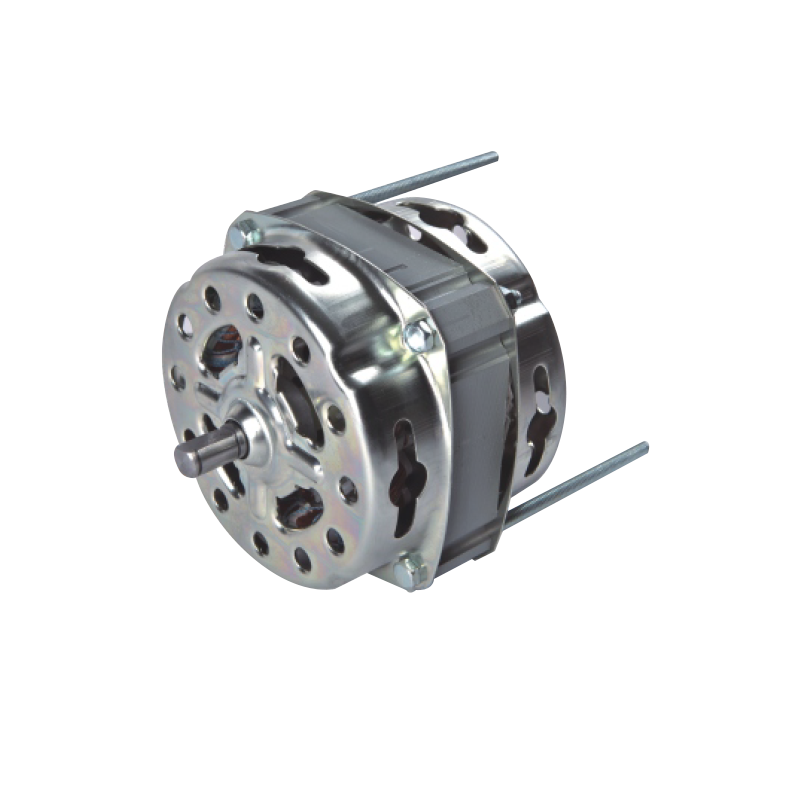
Grinding machine motors are core power components designed specifically for various types of grinding equipment, widely used in industries such as metalworking, wood processing, ore crushing, ceramic grinding, and chemical raw material processing. Known for their high efficiency and stable performance, these motors provide strong and continuous power output to the grinder, ensuring smooth and precise machining. Grinder motors typically feature high-temperature resistance, overload resistance, low noise levels, and a long lifespan. They maintain excellent performance under high-load, continuous operation, improving overall production efficiency.
Grinding machine motors are designed for compactness and installation flexibility, adapting to various types of grinding equipment, including vertical grinders, horizontal grinders, and small benchtop grinders. Some high-end models also feature intelligent control functions, enabling refined operation through speed regulation, start/stop, and protective devices, meeting the demands of modern industrial automation and high-precision machining. Whether used in traditional manual grinding or modern automated production, grinder motors provide reliable power support, becoming a crucial core component for ensuring grinding efficiency and quality.
As a Grinding Machine Motor manufacturer in China, Anhui Juhong Electrical Technology Co., Ltd. designs and builds the drive units that sit at the heart of benchtop, pedestal, vertical and horizontal grinding equipment. Our plant covers 12,000 m² in the Langxi Economic Development Zone, Xuancheng, Anhui, and combines closed double-point high-speed precision presses, automatic winding insertion machines and electronic aluminum casting equipment with in-house electrical testing. This category is built to order: output, speed, mounting geometry and control interface are fixed against the machine the motor has to drive.
Company output reaches 4.5 million units a year — 4 million household appliance motors and 500,000 other motors — supported by more than 150 employees, a technical team of over 20 staff and two senior engineers. Grinding machine motors are a specification-led part of that programme, and every build follows the same lamination, winding and inspection discipline as our volume lines.
Our Position in the Grinding Machine Motor Range
We build around the AC Mini Universal Grinding Machine Motor platform and adapt it to the supply voltage, frame and shaft geometry of the customer's machine. Where a grinder needs a different electrical approach, the same stator and assembly base is carried over with an alternative winding, rotor or control arrangement.
- Grinding machine motors — universal and AC designs for small bench grinders, pedestal units and compact industrial grinding heads, with compact frames and flexible mounting.
- AC Motor range — single-phase and three-phase induction builds sharing our stator, lamination and winding tooling when a fixed-speed drive is the better fit.
- Special type motors — high-temperature and precision drives for environments or duty profiles outside the standard grinding platform.
- Motor spare parts — stators, rotors, shafts, end shields, fans and terminal components for service and repair programmes.
The wider Other Motor programme covers fan, cooling fan, extractor hood, waterproof and tubular families, which gives us shared tooling and component sourcing across related build types.
Application Fit Across Grinding Operations
Grinding duty is a transient load, not a steady-state one. Wheel inertia, workpiece pressure, coolant exposure and start frequency decide whether a compact universal motor or a larger induction frame is the correct starting point.
| Grinding Equipment | Driven Duty | What We Confirm |
|---|---|---|
| Benchtop and pedestal grinders | Continuous wheel rotation, frequent starting, operator-controlled loading | Output power, voltage and frequency, wheel-speed shaft rpm, shaft extension, flange and bolt pattern |
| Vertical spindle and surface grinding | Stable torque at fixed speed over long unattended runs | Rated torque at working speed, insulation system, temperature rise under sustained load, mounting flange |
| Horizontal cylindrical grinding | Low-vibration rotation and speed stability for surface finish | Rotor balance, bearing selection, shaft concentricity, acceptable noise level |
| Wet grinding and slurry lines | Humidity, coolant splash and abrasive dust exposure | Enclosure and sealing arrangement, cable entry direction, corrosion protection of exposed parts |
| Portable and hand-held grinders | Wide speed band, brush wear, repeated thermal cycling | Brush grade and access, commutation noise limits, speed regulation, thermal cut-out arrangement |
| Automated grinding cells | Contactor or inverter control with interlocked start and stop | Control voltage, terminal layout, feedback signals, permissible starts per hour, braking behaviour |
Specification Envelope We Confirm Before Tooling
Nothing is released to production until the electrical and mechanical envelope is agreed on paper. Our proposal lists the working point first and the construction detail second, so that the motor suits the grinder rather than the nearest catalogue frame.
- Supply configuration of the destination market: single-phase or three-phase, 50 Hz or 60 Hz, and the control voltage for any auxiliary circuit.
- Output, shaft speed and rated torque at the wheel or spindle, not at the nameplate alone.
- Mounting arrangement: foot, flange or face mount, bolt circle, shaft diameter, shaft extension, keyway or flat, and overall length inside the housing.
- Duty rating and expected starts per hour, including reversal frequency where the grinding cycle alternates direction.
- Ambient and enclosure conditions on site: dust, coolant mist, humidity, and the maximum surrounding air temperature.
Winding, Lamination and Thermal Design
Electrical losses become heat, and a grinding head is usually a closed space with limited airflow. Rotor and stator laminations are stamped on our high-speed precision presses, then wound and inserted on automated lines, which keeps slot fill and winding geometry consistent between the sample and the production batch.
Copper and aluminum winding options are both available and are quoted separately, because conductor material changes resistance, thermal margin and cost at the same nominal output. Bearing selection, ventilation path and end-shield design are matched to the intended continuous running time rather than to a single short test.
Speed Regulation, Protection and Automation Interface
Universal and AC grinding machine motors can be supplied with speed regulation, controlled start and stop, and protective devices where the order specifies them. This supports refined operation on machines moving from manual grinding to semi-automatic or fully automated production.
- Terminal block layout, lead length and connector type set to the machine's existing harness.
- Overload, thermal and no-volt protection arrangement agreed as part of the drive interface.
- For inverter duty, we work to the stated carrier frequency, acceleration ramp and starts per hour to keep winding stress acceptable.
Quality Control, Compliance and Acceptance Evidence
Quality management across the company follows ISO9001, ISO14001 and OHSAS18001 systems covering product development, material procurement, production control, shipment inspection and after-sales service. As an electromechanical manufacturing enterprise we also comply with mandatory certifications including CCC, UL, CE and TUV, and hold 9 utility model patents and 2 invention patents.
Routine inspection and 6S on-site management run throughout the shop, and the Juhong motor series has maintained a 100% pass rate in spot checks carried out by national, provincial and municipal quality inspection centres. For project orders we agree the acceptance scope in advance — the electrical checks, running test, speed and current measurement, vibration and noise readings, and the sample approval stage that precedes volume build.
Information We Use to Configure Your Solution
These are the inputs that let us quote a buildable grinding machine motor instead of an approximation. Missing items are raised as questions during the technical review.
- Grinder type, wheel or spindle diameter, inertia and the required working speed.
- Supply voltage, frequency, phase, and the control voltage available in the machine panel.
- Duty cycle, continuous running time, starts per hour and expected service life.
- Mounting drawing, shaft drawing or a physical sample for reverse-engineering of interfaces.
- Site conditions: ambient temperature, dust, coolant, humidity and enclosure type.
- Annual quantity, packaging requirement, labelling, and the compliance evidence needed for the destination market.
Installation, Documentation and Service Support
Motors are supplied with the terminal identification, wiring and mounting information needed on the assembly line, and samples are provided for machine-side validation before series production. Installation guidance covers shaft alignment, coupling or flange fitting, belt tension where a belt drive is used, and the cooling clearance the motor needs inside the grinder housing.
Serviceability is designed in through replaceable bearings, brushes on universal builds, terminal components and end shields, and we supply matching spare parts for the life of the programme. Packaging is agreed per order with the customer's labelling, and shipment inspection is the final step in the quality sequence that starts at incoming material.
Frequently Asked Questions
What grinding machine motors does Juhong build?
Our range centres on the AC mini universal grinding machine motor for benchtop, pedestal and compact industrial grinders, with AC induction alternatives, special type motors for high-temperature or precision duties, and matching spare parts for service programmes.
Can you match the mounting and shaft dimensions of our existing motor?
Yes. We work from drawings or a sample and reproduce the shaft diameter and extension, keyway or flat, flange bolt circle, foot spacing and overall length so the motor drops into the existing housing.
How is the power rating chosen for a bench or pedestal grinder?
The starting point is the torque needed to accelerate the wheel and hold speed under workpiece load, plus the temperature rise during continuous running. We calculate the working point from wheel diameter, inertia and duty, then confirm the frame and winding that deliver it.
Do you supply motors with speed regulation or protective devices?
Where the order specifies it, we build in speed regulation, controlled start and stop, and protective devices, and we agree the terminal layout and control voltage with the machine's electrical interface.
What do you need to prepare a quotation?
Grinder type, supply voltage and frequency, required speed and output, duty cycle, mounting drawing or sample, ambient conditions, annual quantity and packaging requirements. A test sample request is handled alongside the quotation.
How are the motors inspected and packed before shipment?
Production follows our ISO9001, ISO14001 and OHSAS18001 controlled processes with CCC, UL, CE and TUV compliance where applicable. Ordered acceptance checks are completed, then units are packed to the agreed specification with the labelling required for the destination.
No.6 Wuyashan Road, Langxi Economic Development Zone, Xuancheng City, Anhui, China
+86-563-7370081
