
 English
 中文简体







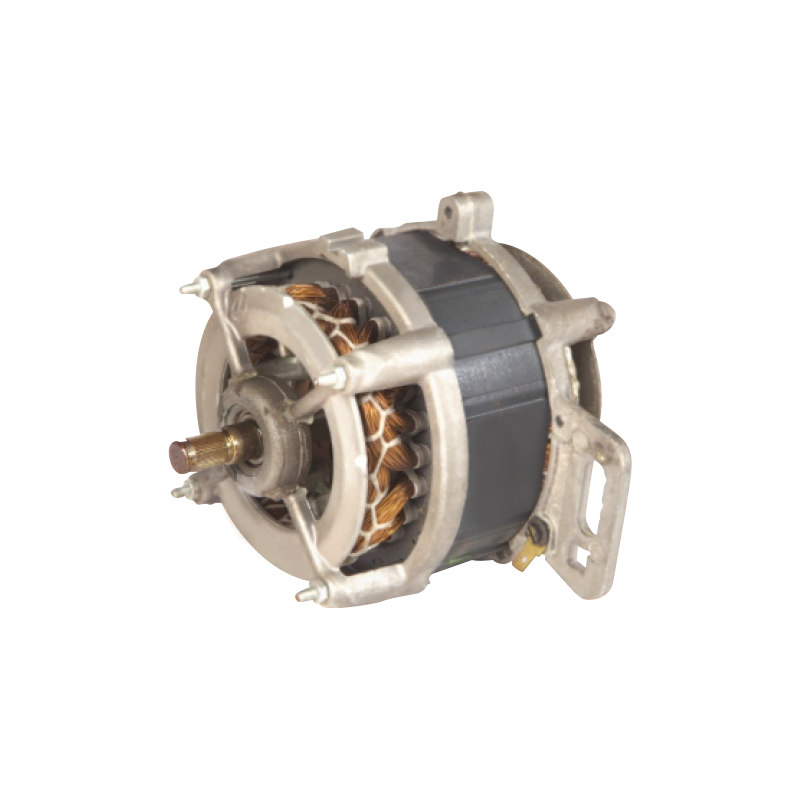
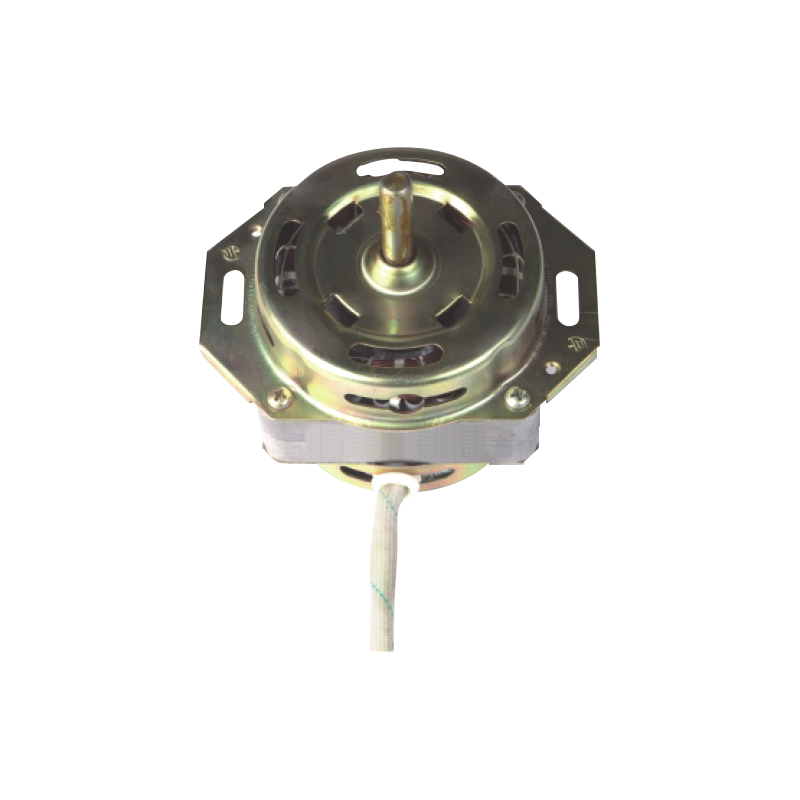
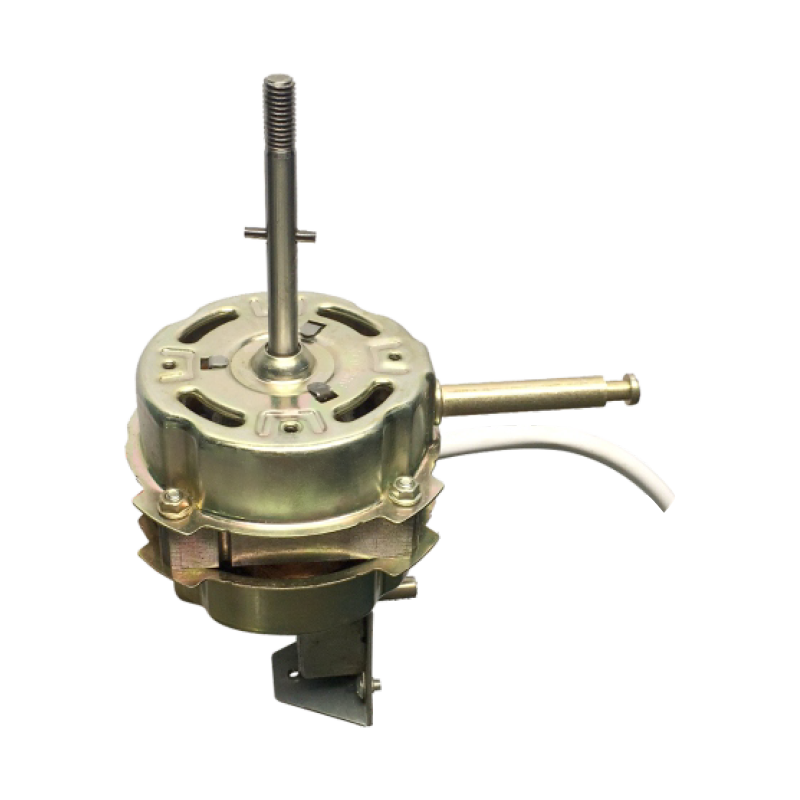
Anhui Juhong Electrical Technology Co., Ltd. covers an area of 12,000 square meters, with fixed assets of 50 million RMB and over 150 employees, including more than 20 technical personnel and 2 professional engineers. We are professional Fan Motor Manufacturer and Custom Fan Motor factory in China.
Juhong Motor is equipped with comprehensive production facilities, featuring advanced domestic industry-leading equipment such as multiple closed double-point high-speed precision presses, automatic winding insertion machines, electronic aluminum casting machines, and other production equipment under advanced production conditions. The annual production capacity reaches 4 million household motors and 500,000 other types of motors.
In addition, the company scientifically implements TQM and 6S on-site management models. It is one of the first electromechanical manufacturing enterprises in the industry to achieve ISO9001, ISO14001, and OHS18001 certifications, while also obtaining mandatory certifications such as CCC, UL, CE, and TUV. The company holds 9 utility model patents and 2 invention patents. Over the years, the "Juhong Brand" series of motors have achieved a 100% pass rate in spot checks conducted by national, provincial, and municipal quality inspection centers, with technical performance reaching industry-leading levels, earning widespread customer acclaim and praise.
Anhui Juhong Electrical Technology Co., Ltd. possesses strong technical capabilities, sophisticated equipment, advanced manufacturing processes, and comprehensive testing methods. The company applies new technologies and new processes to develop new projects. To meet the demands of both domestic and international markets, all employees will continue to uphold the corporate spirit of "excellence in craftsmanship" and "quality-driven success," striving to provide society with "first-class products, first-class quality, and first-class service." We sincerely welcome domestic and international customers, as well as partners from all sectors, to engage in sincere cooperation for mutual development!
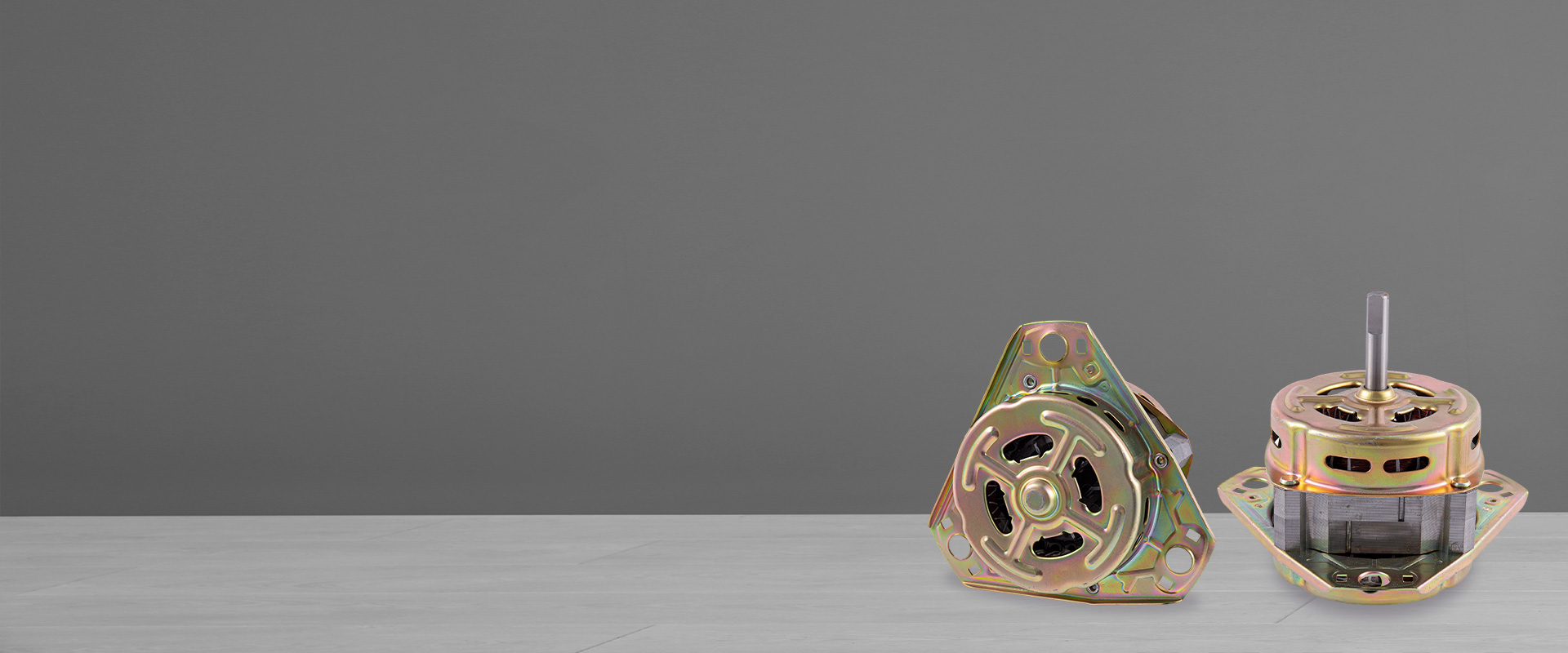
Fan Motor Manufacturer
Fan motors are the core power components that drive various types of fans and are widely used in household appliances, industrial equipment, ventilation systems, and cooling equipment. As the key interface between mechanical and electrical components, fan motors determine fan efficiency and airflow, directly impacting energy consumption, noise levels, and service life. Depending on the application scenario and performance requirements, these motors can be categorized into various types, including AC motors, DC motors, and brushless motors (BLDC motors), each offering distinct performance advantages and technical features.
In the home, fan motors are typically used in devices such as table fans, ceiling fans, floor fans, and air conditioning blowers, emphasizing quietness, energy efficiency, and stability. In industrial and commercial applications, they are used in ventilation equipment, exhaust fans, and cooling systems, focusing on high power output, long operating times, and durability. Furthermore, modern fan motors are increasingly focused on intelligence and energy efficiency. For example, smart fan motors with temperature control, speed regulation, and remote control capabilities can automatically adjust their operating state based on the environment and demand, improving user experience and energy efficiency.
Structurally, fan motors typically consist of core components such as the stator, rotor, bearings, and housing. Different motor designs vary in efficiency, noise control, and heat dissipation. High-quality fan motors also utilize high-temperature and corrosion-resistant materials to ensure stable operation in complex environments. Fan motor manufacturing processes are continuously optimized, including precision winding technology, low-friction bearing design, and efficient magnetic circuit configuration, to enhance overall performance and service life.
Anhui Juhong Electrical Technology Co., Ltd. is a Fan Motor manufacturer based in Xuancheng City, Anhui, China. Our fan motor range is built on closed double-point high-speed precision presses, automatic winding insertion machines and electronic aluminum casting equipment, and it serves household appliance makers, ventilation equipment builders and cooling system integrators who need a motor matched to a defined driven assembly rather than a catalogue wattage.
The range covers three production models: low-noise AC indoor fan motors, AC radiator fan motors and high-power box fan motors. Each responds to a different duty profile — quiet continuous air movement indoors, sustained heat-exchanger cooling, and long-hour mechanical ventilation at higher load.
Fan Motors We Manufacture
Low-Noise AC Indoor Fan Motor
Built for indoor air movers, table, floor and tower fans, and air-conditioner indoor blowers. Design attention sits on rotor balance, bearing selection and magnetic circuit configuration so that airflow is delivered with low vibration and stable speed across the operating range.
AC Radiator Fan Motor
Applied to radiator, condenser and heat-exchanger cooling, where the motor runs in a warmer ambient and must hold speed during extended duty. Insulation system, thermal path and ventilation openings are the governing design variables.
High-Power Box Fan Motor
For box fans, axial ventilation units and exhaust assemblies. The build targets higher shaft power, rigid mounting and heat dissipation so the motor can carry continuous ventilation loads in commercial and light industrial installations.
Adjacent fan-duty motors in the wider programme include cooling fan motors and extractor hood motors, which we review together with the models above when a project spans several air-moving positions in the same appliance or unit.
Application Fit Across the Range
| Fan motor type | Typical driven equipment | Duty character | Configuration focus |
|---|---|---|---|
| Low-noise AC indoor fan motor | Table, floor and tower fans; AC indoor blowers; air circulators | Continuous low to mid speed, acoustic-sensitive | Bearing type, rotor balance, speed stability, lead-out routing |
| AC radiator fan motor | Radiators, condensers, heat exchangers, cooling modules | Sustained running in elevated ambient | Insulation system, thermal path, shaft and bracket interface |
| High-power box fan motor | Box fans, axial ventilation units, exhaust fans | Long operating hours at higher shaft load | Shaft power, mounting rigidity, heat dissipation, terminal arrangement |
| Cooling and extractor hood duty motors | Cooling fans, range hoods, humid or greasy air paths | Continuous duty with contamination exposure | Enclosure treatment, winding protection, bearing sealing |
Motor Architecture and Configuration Choices
Our fan motors are AC machines, and the useful selection work happens in the details around that choice. Two appliances with similar airflow requirements can need different pole counts, shaft speeds and starting behaviour because the impeller, the bracket and the air path are different.
- Rated speed referenced to the motor shaft, with the fan or impeller side of the transmission stated separately
- Continuous rated torque, starting torque under load and permissible starts per hour treated as distinct figures
- Shaft diameter, shaft length, flat or keyway, and rotation direction
- Mounting brackets, base plates or clamp bands matched to the fan housing
- Lead-out length, terminal block or connector type, and capacitor arrangement for single-phase designs
- Bearing type and lubrication appropriate to the mounting orientation and duty cycle
Winding, Bearing and Thermal Design
Winding insertion on automatic equipment keeps coil placement and slot fill consistent, which supports repeatable electrical behaviour across a production batch. Bearing selection, preload and rotor balancing then reduce vibration and airborne noise, while the magnetic circuit is configured for the intended speed band rather than for a single rated point.
Heat is the practical limit in enclosed fan housings. Where a fan motor sits behind a grille or inside a cabinet with restricted airflow around the frame, we treat housing materials, winding insulation and the dissipation path together so that continuous operation remains inside the temperature the insulation system is designed for.
Controls, Line Integration and Installation
Interface definition matters as much as the motor itself. We agree with the customer how the fan motor connects to the appliance or ventilation control: fixed speed taps, a switched live supply, a capacitor circuit, or a control board that regulates speed through the supply. That decision sets the lead-out scheme, terminal layout and the marking on the motor.
Installation is usually defined by the mounting interface and the air path. Rigid brackets with correct bolt torque hold shaft alignment and limit transmitted vibration; adequate clearance around the frame keeps the thermal path open. For cooling and extractor duty, the position of the motor relative to moisture, grease and dust determines whether additional winding or bearing protection is needed.
Quality Management and Compliance
Quality management certifications ISO9001, ISO14001 and OHSAS18001 cover our operations from product development and finalisation through material procurement, production control, shipment inspection and after-sales service. As an electromechanical manufacturing enterprise we also comply with mandatory certifications including CCC, UL, CE and TUV, and we hold 9 utility model patents and 2 invention patents.
- TQM and 6S on-site management across the production floor
- Spot checks by national, provincial and municipal quality inspection centres have returned a 100% pass rate for the Juhong Brand motor series
- Annual capacity of 4 million household motors and 500,000 other motor types
- Project acceptance items agreed per order before shipment, including the inspection records released with the batch
Before production, we review the sample against the agreed drawings and the customer's own validation plan. For fan motors that travel inside a finished appliance, integrated running checks on the customer's unit remain the decisive acceptance step, and we support that stage with drawing revisions and revision-controlled samples.
Information We Use to Configure Your Solution
A fan motor proposal is prepared from the driven assembly and the operating conditions, not from a wattage alone. The list below is what lets us propose the right model and the right variant of it.
- Fan type, impeller diameter, blade count and total rotating inertia
- Required airflow and static pressure, or the target shaft speed
- Supply voltage, frequency and phases available at the appliance or installation
- Duty cycle, running hours per day and expected starts per hour
- Ambient temperature, humidity, dust, grease or corrosion exposure
- Acoustic target measured at the appliance rather than at the motor
- Shaft, bracket and mounting dimensions with a sample or drawing
- Lead-out length, connector type and control interface
- Annual volume, packaging requirement and delivery scope
Our three fan motor models are shown in full in the Low-Noise AC Indoor Fan Motor and High-Power Box Fan Motor listings. Where a project needs a customer-specific shaft, bracket or lead arrangement, we develop it as a custom fan motor variant against the sample and drawings agreed at the start.
Maintenance, Spares and Service Life
Fan motors are serviceable items within the appliances and ventilation units they drive. Bearing condition, shaft end-play and mounting tightness are the practical wear points, and motors running in greasy or dusty air paths typically need attention sooner than clean indoor units. We supply matching spare parts through our motor spare parts programme so that replacement bearings, shafts, brackets and terminal components stay consistent with the original build, and we keep drawings for the supplied variant on file for repeat orders and field service.
Frequently Asked Questions
Which fan motors does Juhong manufacture?
We produce low-noise AC indoor fan motors, AC radiator fan motors and high-power box fan motors, supported by adjacent fan duty products including cooling fan motors and extractor hood motors. All three fan motor models are AC designs built at our Langxi facility, where annual capacity reaches 4.5 million units across household and other motor types.
Can a fan motor be customised to our fan housing and shaft?
Yes. We develop customer-specific variants around the shaft, bracket, lead-out and terminal arrangement defined by the fan housing. The starting point is a sample or a dimensioned drawing of the mounting interface together with the operating speed and duty cycle, so the custom work stays inside a motor architecture that already suits the application.
What information do you need to quote a fan motor?
The driven assembly, required speed or airflow, available supply, duty cycle, ambient conditions, acoustic target, mounting dimensions and annual volume. With those we can select the model, define the configuration and prepare the quotation with the agreed delivery scope and packaging.
How is noise controlled in the low-noise indoor fan motor?
Noise comes from several sources at once, so we address rotor balance, bearing type and preload, magnetic circuit configuration and the rigidity of the mounting interface together. The final acoustic judgement is made on the customer's appliance, because the housing, grille and blade design shape the sound the end user hears.
Which certifications apply to your fan motors?
Our management systems are certified to ISO9001, ISO14001 and OHSAS18001, and as an electromechanical manufacturer we comply with mandatory certifications such as CCC, UL, CE and TUV. The specific certification file released with an order follows the model, the destination market and the configuration supplied, and is confirmed when the order is placed.
Do you support repeat orders and field service?
We keep the drawings and build records for each supplied variant so that repeat orders and field replacements match the original motor. Spare components are supplied through the Cooling Fan Motor and motor spare parts programme, and technical documentation covering installation and connection is provided with the shipment.
No.6 Wuyashan Road, Langxi Economic Development Zone, Xuancheng City, Anhui, China
+86-563-7370081
