
 English
 中文简体







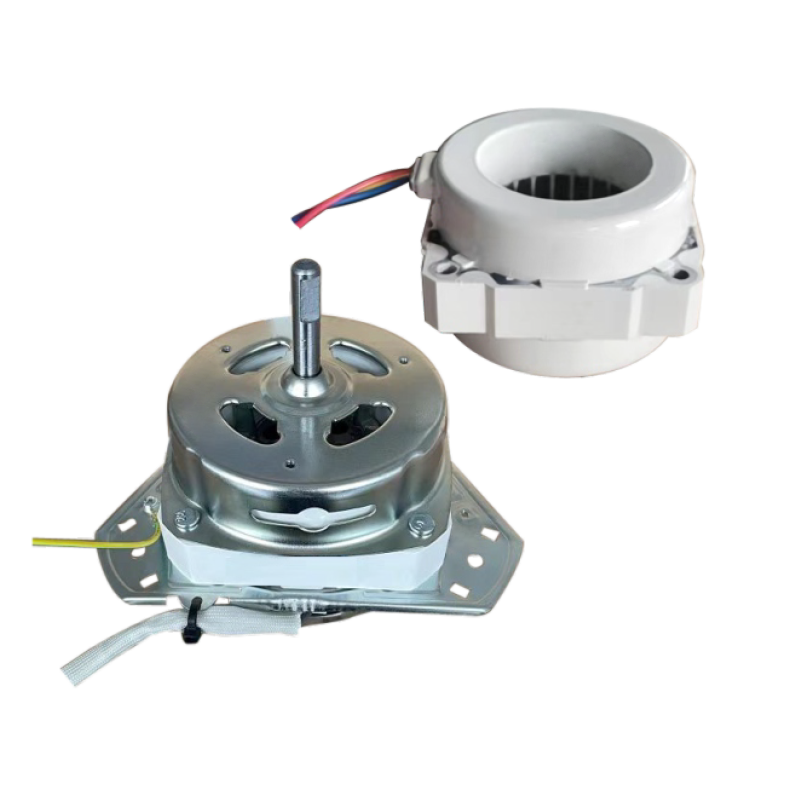
Anhui Juhong Electrical Technology Co., Ltd. covers an area of 12,000 square meters, with fixed assets of 50 million RMB and over 150 employees, including more than 20 technical personnel and 2 professional engineers. We are professional Waterproof Motor Manufacturer and Custom Waterproof Motor factory in China.
Juhong Motor is equipped with comprehensive production facilities, featuring advanced domestic industry-leading equipment such as multiple closed double-point high-speed precision presses, automatic winding insertion machines, electronic aluminum casting machines, and other production equipment under advanced production conditions. The annual production capacity reaches 4 million household motors and 500,000 other types of motors.
In addition, the company scientifically implements TQM and 6S on-site management models. It is one of the first electromechanical manufacturing enterprises in the industry to achieve ISO9001, ISO14001, and OHS18001 certifications, while also obtaining mandatory certifications such as CCC, UL, CE, and TUV. The company holds 9 utility model patents and 2 invention patents. Over the years, the "Juhong Brand" series of motors have achieved a 100% pass rate in spot checks conducted by national, provincial, and municipal quality inspection centers, with technical performance reaching industry-leading levels, earning widespread customer acclaim and praise.
Anhui Juhong Electrical Technology Co., Ltd. possesses strong technical capabilities, sophisticated equipment, advanced manufacturing processes, and comprehensive testing methods. The company applies new technologies and new processes to develop new projects. To meet the demands of both domestic and international markets, all employees will continue to uphold the corporate spirit of "excellence in craftsmanship" and "quality-driven success," striving to provide society with "first-class products, first-class quality, and first-class service." We sincerely welcome domestic and international customers, as well as partners from all sectors, to engage in sincere cooperation for mutual development!
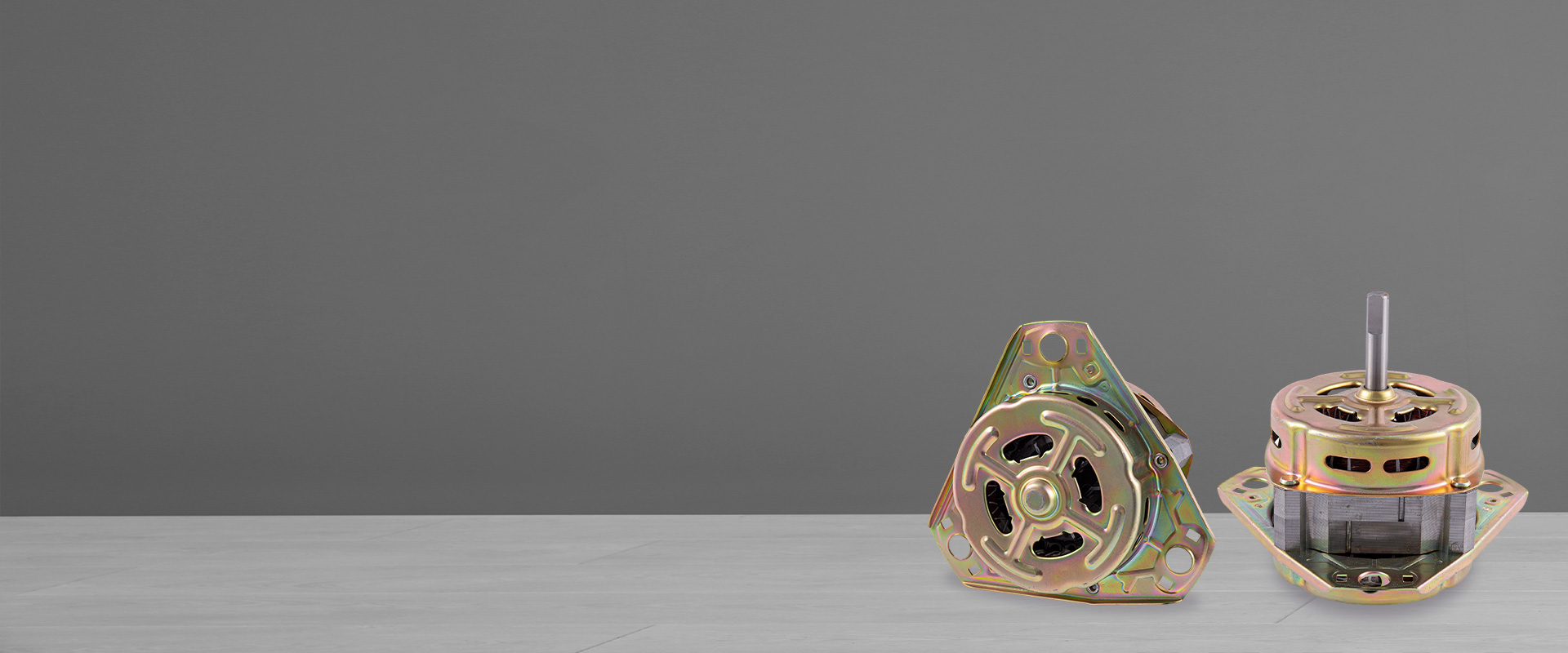
Waterproof Motor Manufacturer
The waterproof motor is designed for operation in humid and wet environments and is widely used in industrial equipment, household appliances, marine machinery, pumps, and outdoor automation systems. These motors offer excellent water-, moisture-, and dust-proof properties, effectively resisting water vapor, liquid splashes, and dust intrusion, ensuring long-term stable operation.
The waterproof motors feature a high-grade sealed structure with a corrosion-resistant housing and waterproof seals. Some models also feature rust-proof treatment, making them suitable for use in high humidity and changing climates. They offer smooth operation, low noise, and high efficiency, meeting the stringent reliability requirements of industrial production and suitable for home and commercial use.
The waterproof motor series offers a wide range of options, tailored to power, speed, and mounting configuration. Whether driving pumps and fans, cleaning equipment, power tools, or other specialized machinery, these waterproof motors provide a high-performance, durable solution.
Anhui Juhong Electrical Technology Co., Ltd. manufactures waterproof motors for equipment that runs in humid, wet, splash-exposed and dusty conditions. As a Waterproof Motor manufacturer, we build these units inside our wider Other Motor programme, matching enclosure sealing, winding, shaft and mounting to the driven load rather than to a catalogue wattage.
Our plant in the Langxi Economic Development Zone, Xuancheng City, Anhui covers 12,000 m² with RMB 50 million in fixed assets, more than 150 employees and a technical team of over 20 engineers. Annual output reaches 4.5 million units, of which 500,000 are non-household motors — the group that includes sealed and waterproof designs.
What Our Waterproof Range Covers
Waterproof execution is a sealing and materials discipline applied to a proven motor platform, not a single fixed model. The reference unit in this range is our Waterproof and Dustproof Brushless DC Motor, and from that base we fix power, speed, mounting pattern and cable exit to suit the machine. Sealed brushless DC designs carry the main range; AC and special-purpose platforms are reviewed where the duty is fixed-speed or the environment adds temperature or corrosion load.
| Configuration dimension | What we fix on the drawing | Effect on the installed motor |
|---|---|---|
| Electrical platform | Brushless DC with a matched driver, or a fixed-speed variant where the duty allows | Sets the speed-control range, start behaviour and wiring interface |
| Supply and frequency | DC bus level, or single/three-phase supply defined by the host machine | Determines compatibility with the existing control cabinet or electronics |
| Power and shaft speed | Output and speed quoted at the motor shaft, at the working point | Sizes the frame and the thermal margin of the design |
| Torque profile | Continuous torque, short-duration peak, start and reversal behaviour | Covers locked-rotor events and uneven loads in real cycles |
| Sealing and enclosure | Housing material, seal geometry, shaft seal, cable-entry gland | Defines resistance to splashes, condensation, vapour and dust |
| Mounting interface | Flange, foot or bracket pattern, bolt circle, pilot diameter | Drops into the existing assembly without adapter plates |
| Shaft and coupling | Diameter, length, keyway, flat, thread or pin drive | Accepts the pulley, impeller, worm gear or rotor connection |
| Winding and insulation | Conductor type and gauge, slot insulation, impregnation, thermal protection | Governs moisture and temperature endurance over service life |
| Lead-out | Cable length, connector type, sealed exit point | Protects the point where ingress most often begins |
| Noise and vibration | Bearing grade, rotor balance quality, mounting isolation | Meets acoustic limits for indoor and residential equipment |
Where Waterproof Motors Fit
Sealed motors earn their cost where moisture, vapour, splash or fine dust would shorten the life of a standard open machine. We match each enquiry to the exposure condition first, then to the mechanical and electrical duty.
| Application | Driven load | Waterproof consideration |
|---|---|---|
| Drainage and circulation pumps | Impeller, long or continuous duty | Shaft seal selection and condensation management at the wet end |
| Marine and deck machinery | Winches, hatches, ventilation fans | Salt-laden air, corrosion-resistant housing, rust-proof treatment |
| Outdoor automation | Belt, screw or gear transmission | Rain exposure and repeated temperature cycling |
| Cleaning equipment | Brush, roller or pump drive | Detergent splash and hose-down exposure |
| Industrial wash-down zones | Fan and conveyor drives | Combined dust and moisture load on seals and bearings |
| Household appliances and range hoods | Fan or drum drive | Vapour, grease and humid air with strict noise limits |
Sealing, Housing Materials and Corrosion Control
Every sealed motor is a chain of interfaces: the joint between housing halves, the shaft pass-through, the cable exit and the mounting face. Our sealed designs use a high-grade sealed structure with a corrosion-resistant housing and waterproof seals, and selected models receive rust-proof treatment for high-humidity and changing climates.
- Exposure definition first: splash, condensation, vapour, hose-down or salt air — the seal arrangement follows the condition recorded in the specification.
- Shaft seal and bearing protection: chosen together, because a seal that runs dry or over-heats shortens bearing life.
- Cable entry: gland or moulded exit, strain-relieved and sealed as part of the enclosure, not as an accessory.
- Drainage and breathing: condensate paths and venting are positioned so that water cannot collect against live parts.
Where a project carries an ingress protection target, the required class is written into the specification and confirmed against the enclosure, seals and lead-out before tooling release.
Electrical and Drive Integration
Waterproof motors are usually integrated into a machine that already has a controller, so the electrical interface is fixed early. We confirm the supply, the control method and the protection chain before a sample is built.
- Drive matching: brushless DC motors are supplied with a driver matched to the winding, hall sensing and speed range of the unit.
- Speed control: fixed speed, multi-tap or continuously variable, with the command interface agreed to the host board.
- Protection: thermal protection, over-current and locked-rotor behaviour defined for the duty cycle.
- Connections: flying leads, sealed connectors or terminal blocks with the pin-out fixed on the drawing.
Performance Data and Duty Cycle Review
A waterproof motor that meets its nameplate rating but overheats in a sealed cabinet is a failed selection. We review the load profile rather than a single operating point: starting torque, acceleration, reversal frequency, rated and peak torque, permissible starts per hour, ambient temperature and the airflow available around the motor.
- Power and speed quoted at the motor shaft, with the transmission ratio stated separately.
- Continuous and short-duration torque treated as different figures.
- Efficiency referenced to the working range, not one steady-state value.
- Low noise and smooth running verified on the assembled unit, where sealing can change the acoustic signature.
Manufacturing and Quality Control
Sealed motors depend on consistent manufacturing more than on any single component. Our production floor runs closed double-point high-speed precision presses, automatic winding insertion machines and electronic aluminium casting machines, supported by comprehensive testing methods and TQM and 6S management.
We were among the first electromechanical manufacturers in the sector to hold ISO9001, ISO14001 and OHSAS18001 certification, and our products also carry CCC, UL, CE and TUV conformity. The company holds 9 utility model patents and 2 invention patents, and the Juhong brand series has maintained a 100% pass rate in spot checks by national, provincial and municipal quality inspection centres.
Acceptance, Installation and Maintenance
Inspection scope is fixed on the approved specification sheet and typically covers no-load speed and current, insulation resistance and dielectric withstand, seal and enclosure integrity, running noise and visual conformity to the golden sample. Inspection records travel with the shipment, and the nameplate, wiring diagram and packing list follow the production order.
- Mount the motor on a flat face with the specified bolt circle and torque; a distorted flange can open a seal path.
- Respect shaft loading and belt tension limits to protect bearings and the shaft seal.
- Keep the cable exit below the enclosure where possible, and form a drip loop on outdoor installations.
- Do not block any breathing path or cooling surface; sealed units still reject internal heat.
- Replacement bearings, seals, shafts and wiring components are supplied through our Motor Spare Parts range.
Information We Use to Configure Your Solution
Send the working point and the environment, and we return a configuration with drawings, a performance summary and a production schedule.
- Application and driven assembly: pump, fan, drum, gearbox or belt, with the transmission ratio.
- Load profile: torque or power at the shaft, speed band, duty cycle, starts per hour, peak events.
- Exposure: splash, condensation, hose-down, salt air, dust, ambient and operating temperature.
- Electrical interface: supply, driver or controller, control signal, connector type and pin-out.
- Mechanical interface: mounting pattern, shaft drawing, available envelope, weight limit.
- Commercial and delivery inputs: target quantity, packaging and labelling, destination, required documentation.
Frequently Asked Questions
Which environments are your waterproof motors built for?
They are designed for humid and wet operating conditions — liquid splashes, water vapour, condensation and dust intrusion — in industrial equipment, household appliances, marine machinery, pumps and outdoor automation. The seal arrangement, housing material and rust-proof treatment are selected for the specific exposure of each project.
Can you match a motor to an existing pump or outdoor assembly?
Yes. We work from the mounting pattern, shaft drawing and driven load, then confirm power, speed and torque at the motor shaft. Adapting a standard sealed platform to an existing interface is routine work for our engineering team.
Do you supply brushless DC and AC versions?
Sealed brushless DC designs with matched drivers form the core of the range, including our waterproof and dustproof unit. Where the application is fixed-speed, we review AC and special-purpose platforms for the same sealing requirements.
How do you handle customisation and sample approval?
Customisation covers winding, shaft, mounting flange, cable length and connector, sealing arrangement and nameplate. We release a pre-production sample for fit and function validation against the approved drawing before the production order is scheduled.
What documentation accompanies a waterproof motor order?
Orders ship with the production drawing, nameplate and wiring data, inspection records and packing list. Certification evidence for ISO9001, ISO14001, OHSAS18001, CCC, UL, CE and TUV is available for the models in scope.
What information do you need to prepare a proposal?
The working point, driven assembly, duty cycle, exposure conditions, electrical interface and mechanical drawing are enough for us to select a platform and quote. Quantity, destination and any labelling or documentation requirement complete the package.
No.6 Wuyashan Road, Langxi Economic Development Zone, Xuancheng City, Anhui, China
+86-563-7370081
