
 English
 中文简体
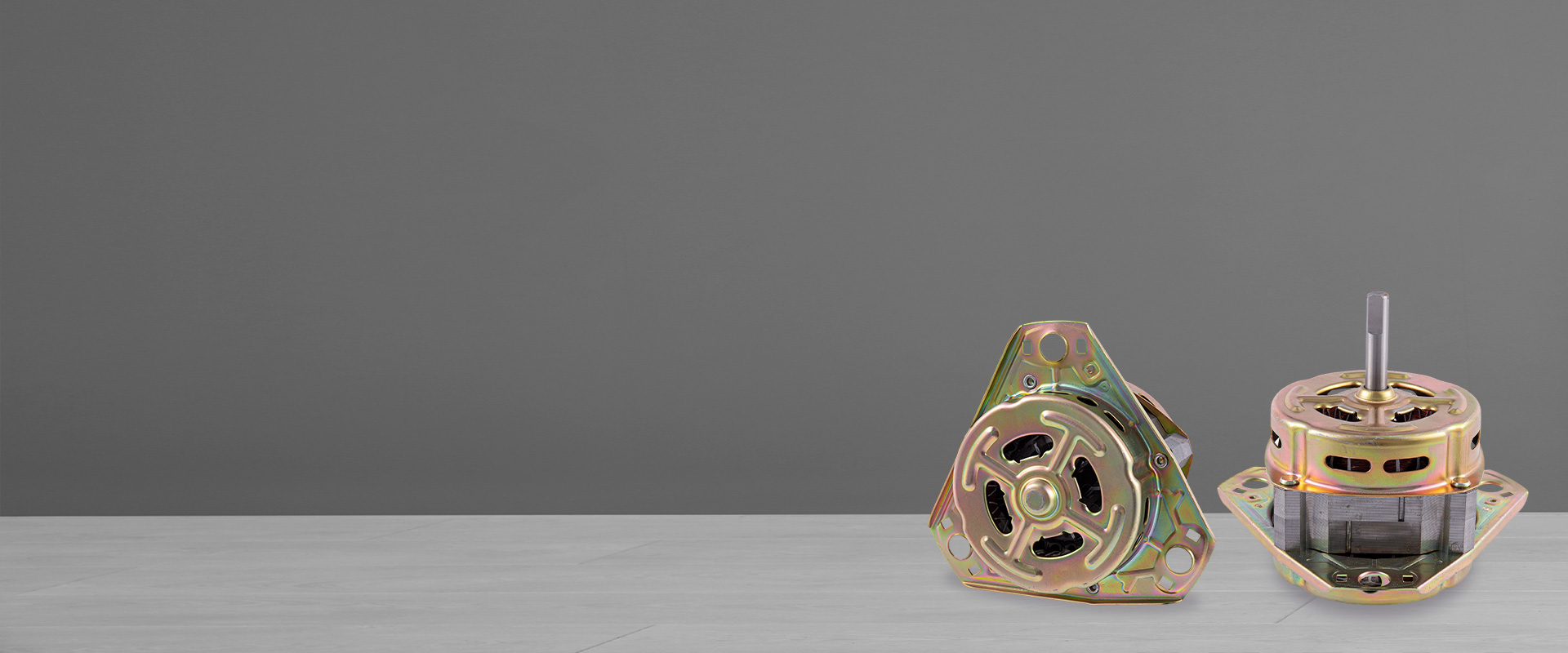







Anhui Juhong Electrical Technology Co., Ltd. covers an area of 12,000 square meters, with fixed assets of 50 million RMB and over 150 employees, including more than 20 technical personnel and 2 professional engineers. We are professional Extractor Hood Motor Manufacturer and Custom Extractor Hood Motor factory in China.
Juhong Motor is equipped with comprehensive production facilities, featuring advanced domestic industry-leading equipment such as multiple closed double-point high-speed precision presses, automatic winding insertion machines, electronic aluminum casting machines, and other production equipment under advanced production conditions. The annual production capacity reaches 4 million household motors and 500,000 other types of motors.
In addition, the company scientifically implements TQM and 6S on-site management models. It is one of the first electromechanical manufacturing enterprises in the industry to achieve ISO9001, ISO14001, and OHS18001 certifications, while also obtaining mandatory certifications such as CCC, UL, CE, and TUV. The company holds 9 utility model patents and 2 invention patents. Over the years, the "Juhong Brand" series of motors have achieved a 100% pass rate in spot checks conducted by national, provincial, and municipal quality inspection centers, with technical performance reaching industry-leading levels, earning widespread customer acclaim and praise.
Anhui Juhong Electrical Technology Co., Ltd. possesses strong technical capabilities, sophisticated equipment, advanced manufacturing processes, and comprehensive testing methods. The company applies new technologies and new processes to develop new projects. To meet the demands of both domestic and international markets, all employees will continue to uphold the corporate spirit of "excellence in craftsmanship" and "quality-driven success," striving to provide society with "first-class products, first-class quality, and first-class service." We sincerely welcome domestic and international customers, as well as partners from all sectors, to engage in sincere cooperation for mutual development!
Extractor Hood Motor Manufacturer
Extractor hood motors are the core power components of kitchen exhaust systems, primarily driving the range hood fan for efficient exhaust and air circulation. These motors are widely used in both home and commercial kitchens for their stable performance, low noise, energy efficiency, and environmental friendliness. Depending on the installation method and functional requirements, range hood motors come in various types, meeting varying power and speed requirements.
These motors offer compact design, high-temperature resistance, oil and dirt resistance, and a long service life, making them suitable for kitchen environments characterized by fumes, humidity, and high temperatures. Modern range hood motors are often equipped with efficient blade designs and precise control systems, which not only improve exhaust efficiency but also effectively reduce energy consumption and operating noise, ensuring comfortable, clean air circulation in the kitchen.
Extractor hood motors are easy to install and maintain, with most models offering quick disassembly and replacement of blades or bearings, facilitating daily cleaning and maintenance. Their high reliability and durability ensure that range hoods maintain stable performance over extended periods of use, ensuring safe kitchen air quality.
Anhui Juhong Electrical Technology Co., Ltd. manufactures extractor hood motors for kitchen exhaust assemblies — the stator, rotor, shaft and housing set that drives a range hood impeller through years of hot, greasy and humid duty. We produce in the Langxi Economic Development Zone, Xuancheng City, Anhui, and supply appliance OEMs, hood assemblers and aftermarket distributors with standard and customised configurations. As an Extractor Hood Motor manufacturer, we size the drive against the hood architecture: impeller diameter, duct resistance, mounting cavity and the control method used on the appliance.
Both extractor hood motor families run on the same stamping, winding and casting lines as our household appliance motor output, so winding data, insulation treatment and rotor balancing follow one controlled process instead of a separate workshop standard.
Our Extractor Hood Motor Range
| Motor family | Electrical design | Shaft / mounting format | Typical hood fit | Configuration focus |
|---|---|---|---|---|
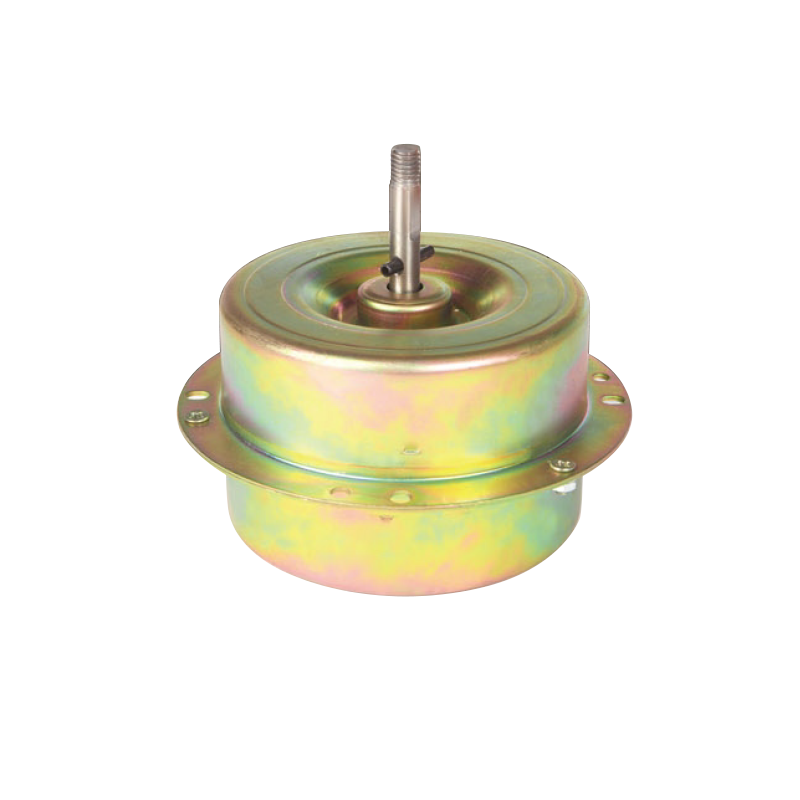
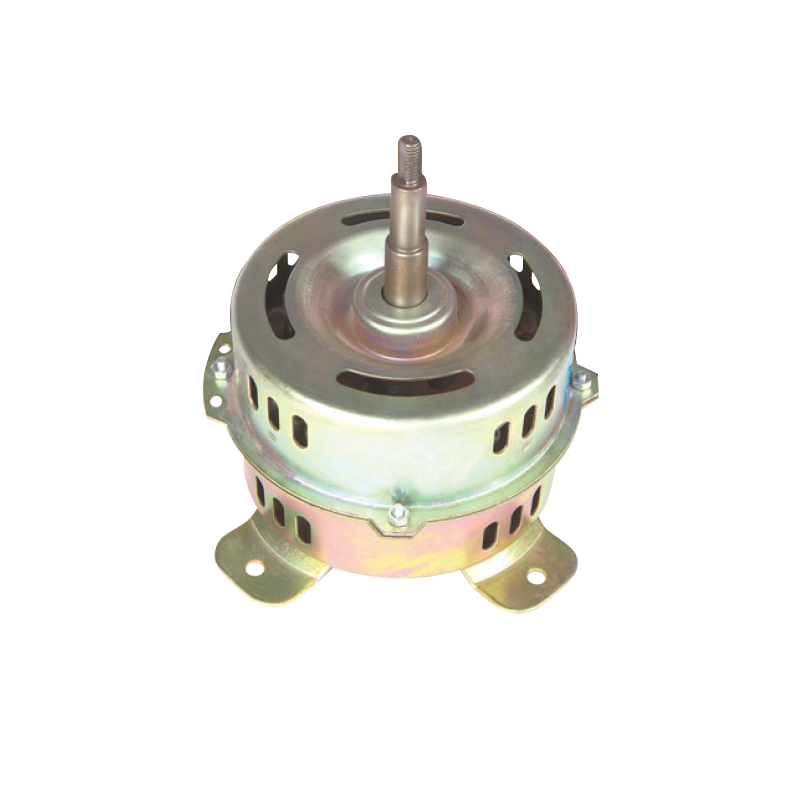
| AC single-phase asynchronous single-shaft range hood motor | Single-phase asynchronous, one shaft extension | Compact frame, single shaft end machined to the impeller bore | Domestic wall-mounted, slim and built-in hoods with one impeller | Shaft diameter and length, stack height, bracket pattern, lead length, winding taps |
| Single-phase capacitor extractor hood motor | Capacitor-run single phase, higher starting and running torque | Single or dual shaft end, capacitor included in the supply scope | Chimney hoods, dual-blower hoods and ducted installations with higher static pressure demand | Capacitor value, terminal arrangement, rotation direction, speed tapping, insulation build |
| Special type drive motors | Reviewed for elevated ambient or harsher duty | Frame and flange matched to the extraction unit | Commercial kitchen extraction and continuous-duty exhaust platforms | Insulation system, housing treatment, thermal margin |
| Motor spare parts | Service components only | Bearings and impeller blades for field replacement | Aftermarket and warranty service programmes | Part numbering against the installed motor version |
Rotation direction, lead-out form and mounting interface are agreed at order confirmation against the customer drawing, so the motor fits the hood cavity already defined by the appliance platform. Where an existing hood uses a general-purpose frame, we compare the working point with the wider Other Motor range before proposing tooling.
Application Fit Across Kitchen Exhaust Systems
Extractor hood motors are transient-duty drives. They start against a cold impeller, run at a fixed working speed for long periods, and are expected to stay quiet while the surrounding cavity fills with cooking vapour and grease. The hood type sets the priorities we engineer for.
- Slim and under-cabinet hoods: shallow frames, low acoustic output and minimal axial length dominate; the motor sits close to the filter.
- Wall-mounted chimney hoods: single or twin impellers with enough static pressure for a full duct run.
- Island hoods: longer ducts raise system resistance, so the drive is chosen on the pressure point rather than airflow alone.
- Commercial canopy extraction: higher ambient temperature and near-continuous operation, where thermal margin matters more than nominal watts.
Heat, Grease and Humidity
- Winding insulation and varnish are matched to the temperature rise the motor will see in the hood cavity, not to a bench ambient.
- Bearing type, lubrication and shielding are selected for the mounting attitude and the vapour level around the shaft.
- Housing treatment and shaft protection are specified where cleaning agents or heavy grease loading are expected.
- Air movement past the frame is reviewed with the hood designer, because a sealed enclosure changes the permissible duty.
Critical Specifications We Confirm Before Tooling
A hood motor is not selected by wattage. Each of the following items is fixed in writing before samples or tooling start, because changes afterwards affect the lamination stack, winding and shaft machining together.
- Rated voltage and frequency, with the tolerance band used in the destination market
- Required torque at the impeller working speed, plus starting torque and starting current limits
- Speed tapping arrangement for low, medium and high hood settings
- Capacitor value and tolerance for capacitor-run designs
- Insulation class, temperature rise and declared duty cycle
- Shaft diameter, extension length, run-out and any flat, keyway or thread
- Mounting bracket pattern, foot position and frame outside dimensions
- Lead-out length, connector type and terminal identification
- Rotation direction viewed from the shaft end
- Vibration and acoustic targets measured on the agreed test fixture
Controls and Line Integration
Most extractor hood motors are switched directly or through a small speed selector, so the winding taps, capacitor position and lead termination are configured to the hood's existing switch or control board. Where a hood uses phase-angle or electronic speed control, we review the motor impedance and the controller output together before fixing the winding, because the two cannot be treated as independent parts.
We also align the mechanical interface with the assembly line: terminal orientation, fixing screws, impeller fixing method and cable routing must allow the hood to be built in the same takt time as the rest of the unit, and to be serviced from the front of the appliance.
Manufacturing and Quality Control
Anhui Juhong Electrical Technology Co., Ltd. operates a 12,000 m² plant with fixed assets of RMB 50 million and more than 150 employees, including over 20 technical staff and 2 senior engineers. Equipment includes closed double-point high-speed precision presses, automatic winding insertion machines and electronic aluminium casting machines, supporting an annual capacity of 4 million household motors plus 500,000 other motors.
Our quality system is built on ISO9001, ISO14001 and OHSAS18001, with CCC, UL, CE and TUV compliance for the applicable product configurations, and TQM and 6S management applied on the shop floor. The Juhong series has maintained a 100% pass rate in spot checks by national, provincial and municipal quality inspection centres.
Acceptance Testing for Project Orders
- Incoming inspection of laminations, wire, bearings, capacitors and housings
- In-process checks after winding, insertion and rotor assembly
- End-of-line electrical checks on winding resistance, insulation and no-load running
- Vibration, running current and acoustic checks against the agreed sample
- Label, lead-out, packaging and quantity verification before shipment
Installation, Maintenance and Spare Parts
Extractor hood motors are mounted through brackets or a flange on the hood body, with the impeller fixed on the shaft. Correct seating, fastener tightening and impeller balance determine whether the motor runs quietly for its service life, so we supply mounting guidance with each motor version and match shaft tolerances to the impeller hub.
Service access is designed in: bearings and impeller blades can be replaced without discarding the complete motor assembly, which keeps aftermarket and warranty programmes economical. We supply documentation covering wiring, mounting, cleaning precautions and part identification, and can provide training for distributor service teams on request.
Motors are packed to protect the shaft and lead-out during container transport, with version labels that match the drawing revision on the order. Delivery scope typically covers the motor, capacitor where specified, mounting accessories and inspection documents agreed in the purchase order.
Information We Use to Configure Your Solution
- Hood type, impeller diameter and blade geometry, plus duct length and outlet size
- Supply voltage, frequency and the control method used on the appliance
- Target airflow or torque at the working speed, and the required speed settings
- Cavity dimensions, mounting points and shaft interface drawing
- Expected ambient temperature, grease loading and cleaning regime
- Connector type, lead length and orientation on the production line
- Annual volume, first-order quantity and sample approval requirements
- Inspection, certification and documentation requirements for the destination market
Frequently Asked Questions
Can you supply a motor matched to an existing hood impeller and housing?
Yes. We work from the customer's impeller bore, mounting pattern and cavity drawing, then set shaft dimensions, frame size and bracket position so the motor drops into the existing assembly. A sample is built and tested against the hood before production quantities are released.
Which single-phase designs do you manufacture for range hoods?
We produce AC single-phase asynchronous single-shaft range hood motors for compact hoods, and capacitor-run single-phase motors where higher starting torque or greater duct resistance has to be overcome. Both are configured with the speed tapping, rotation direction and lead-out the hood requires.
How do you handle grease, humidity and heat around the motor?
The insulation system, varnish treatment, bearing selection and housing finish are chosen against the measured cavity conditions rather than a default specification. Where a hood runs hot or continuously, we review the thermal margin and confirm the duty rating with the customer before tooling.
What information do you need to prepare a quotation?
The hood architecture, voltage and frequency, required speed settings, target airflow or torque, cavity and shaft dimensions, connector preference, annual volume and the inspection or certification documents required. With those inputs we can confirm the motor family, configuration and tooling position in a single proposal.
Do you supply spare parts and service components?
Bearings and impeller blades for service replacement are available through our spare parts range, identified against the motor version supplied. Distributors maintaining installed hoods can order these components to the same drawing revision as the original motor.
No.6 Wuyashan Road, Langxi Economic Development Zone, Xuancheng City, Anhui, China
+86-563-7370081
