 English
 中文简体
中文简体
Why AC-versus-DC is an incomplete specification
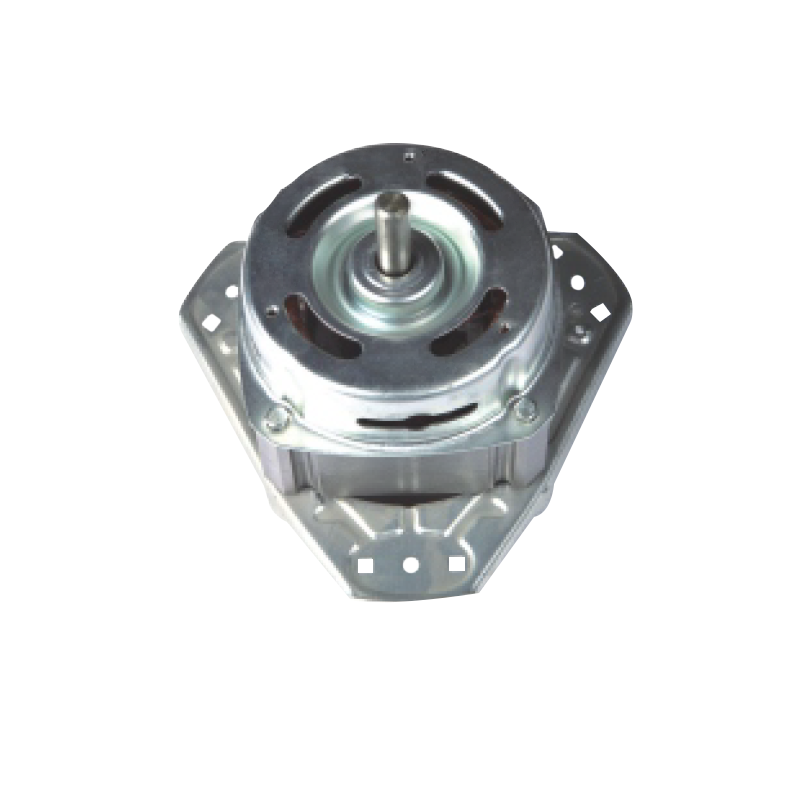
“AC motor” and “DC motor” are convenient purchasing terms but poor descriptions of a modern washing-machine drive. A traditional single-phase induction motor operates from alternating current and may use a capacitor. A brushed universal motor can run on AC or DC and commonly uses electronic phase-angle control. A permanent-magnet synchronous motor (PMSM) or brushless DC (BLDC) machine is electronically commutated; it may be powered from an AC wall outlet through a rectifier and inverter. The appliance's supply type therefore does not identify the motor topology.
For OEM engineering, the meaningful comparison is between complete systems: motor, controller, sensors, wiring, cooling, software and mechanical transmission. A high-efficiency motor can perform poorly if its controller is inefficient at the speeds used most often. Likewise, a low-cost motor may impose costs elsewhere through belt hardware, noise treatment or restricted cycle control.
Three architectures and their control consequences
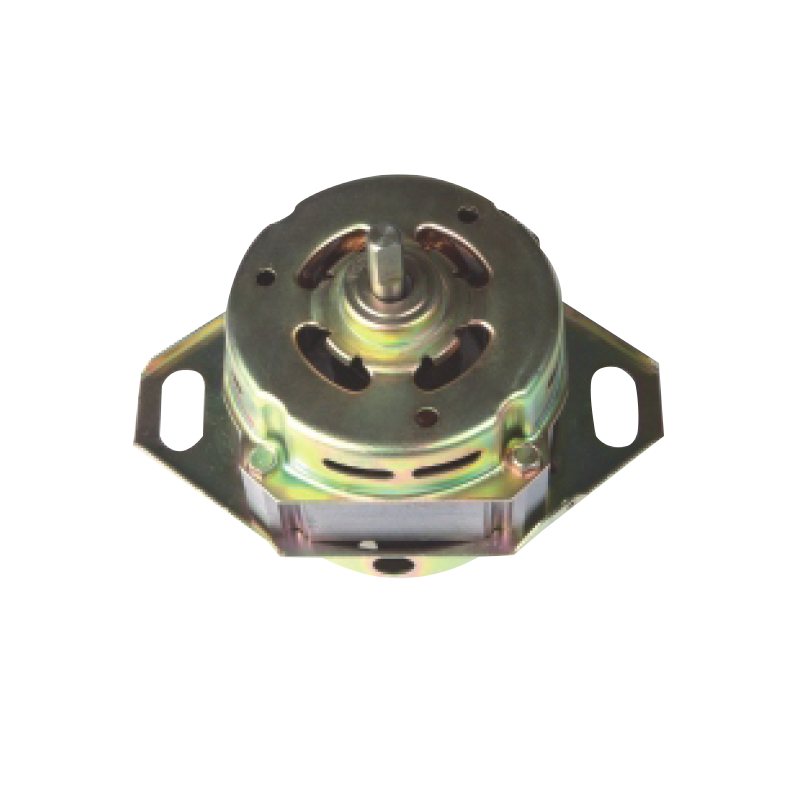
A fixed-frequency induction drive offers simple hardware and can be appropriate for straightforward twin-tub washing duties. Speed is influenced by line frequency, pole count and slip, so wide-range precision speed control is limited without an inverter. A brushed universal motor provides a broad speed range and relatively high power density, but brushes and commutator introduce wear, electrical noise and maintenance considerations. An electronically commutated permanent-magnet drive enables programmed torque and speed control, although it requires power electronics and firmware.
| Architecture | Typical control | Principal advantage | Principal integration burden |
|---|---|---|---|
| Single-phase induction | Line switching / capacitor circuit | Simple, established hardware | Limited speed flexibility |
| Brushed universal | Triac or electronic drive | Broad speed capability | Brush wear and conducted noise |
| BLDC/PMSM | Rectifier and inverter | Programmable torque and speed | Controller, sensing, EMC and software |
The terminology BLDC versus PMSM often reflects back-EMF shape and control strategy rather than two unrelated product families. Actual machines and controllers vary. Procurement documents should specify motor type, control method, operating envelope and interface instead of relying on a single marketing label.
Low-speed torque changes the wash experience
A washing machine needs controlled fabric movement at relatively low drum speed and strong acceleration for spin extraction. A fixed-speed induction motor may use belts or mechanical systems to obtain the required shaft speeds. An inverter-controlled permanent-magnet system can command low-speed torque more directly and shape acceleration ramps to reduce abrupt mechanical shocks. Whether this improves wash quality depends on the drum geometry, load, water level and control algorithm.
Motor torque is not constant across all speeds or temperatures. The OEM should request a continuous-torque curve, short-duration overload capability and speed limits for the actual cooling environment. In electronically controlled systems, current limits, field weakening and DC-bus voltage determine parts of the envelope. Comparing only maximum rpm or peak torque can conceal poor performance at the operating points used during most of the wash cycle.
Compare energy over a cycle, not at one test point
Suppose two complete drive systems deliver 150 W of mechanical power for 20 minutes. If System A has a combined motor-and-controller efficiency of 70% at that operating point, its electrical input is 214.3 W and energy use is 71.4 Wh. At 82% combined efficiency, System B draws 182.9 W and uses 61.0 Wh. The modeled difference is 10.4 Wh for that segment. These are hypothetical operating efficiencies, not published ratings for any particular motor.
Real programs include reversals, pauses, acceleration, spin and standby. An efficient high-speed drive might not lead the energy comparison if its low-speed controller losses or idle power are high. Engineers should integrate measured input power over the same complete cycle: E = ∫Pinput(t)dt. Include control-board standby consumption where relevant. Use identical water and textile loads, supply conditions and program settings to make the comparison meaningful.
Electromagnetic compatibility and acoustic behavior
Power electronics create additional integration requirements. A triac controller may introduce current harmonics and conducted interference; an inverter produces high-frequency switching components that require attention to filtering, grounding, cable routing and motor insulation stress. The appliance must be evaluated against applicable electromagnetic-compatibility requirements in its destination markets. Standards such as IEC 55014-1 and IEC 55014-2 are relevant references for household-appliance emissions and immunity, but edition and national adoption must be checked for the target market.
Acoustic behavior is equally system-dependent. A brushed motor can produce commutation noise; an inverter drive may generate audible tonal components from switching and electromagnetic forces. Mechanical isolation, cabinet resonance and control tuning influence what users hear. Noise should be measured on the assembled appliance at specified operating states rather than inferred from a motor-only bench measurement.
Reliability moves between components
Removing brushes eliminates one wear mechanism but does not remove reliability risk. Electronic drives add semiconductor junctions, capacitors, connectors and firmware. High ambient temperature can accelerate component aging; moisture exposure can affect electronics and insulation. An inverter system also requires fault handling for locked rotor, sensor loss, overcurrent and abnormal DC-bus voltage. A simple induction drive avoids some electronic complexity but may be less flexible for advanced cycles.
Serviceability should be part of architecture selection. Can a failed controller be replaced separately? Are motor and board paired through firmware or calibration? Can a technician distinguish a motor fault from a sensor or inverter fault? Does the spare-parts strategy support the expected product life? A design with lower energy consumption may still need careful warranty and repair-cost modeling.
A procurement decision framework for OEM teams
Start with the required drum speed range, torque during wash, spin acceleration, acoustic target, expected duty and appliance efficiency target. Then compare candidate motor-plus-controller systems under the same cycle. Request input-energy traces, speed regulation, temperature rise, abnormal-operation behavior and controller diagnostics. Cost comparison should include the motor, inverter or triac board, sensors, harness, EMC components, mounting and production calibration.
For a budget twin-tub washer, an induction solution may remain compelling because the operating program is simple and electronics cost matters. For a feature-rich automatic washer requiring precise low-speed motion, adaptable spin profiles and sophisticated diagnostics, an inverter-driven permanent-magnet architecture may justify its complexity. Neither outcome follows from the words “AC” and “DC.” It follows from measured system behavior and the product's commercial priorities.
Control software can be a product differentiator
Variable-speed drives allow OEMs to modify the acceleration slope, anti-imbalance response and delicate-fabric motion without changing pulley geometry. But software flexibility is not free. A controller must handle sensor plausibility, loss of rotor synchronization, thermal derating and recovery after a power interruption. An aggressive acceleration profile may shorten spin-up time while increasing audible vibration or triggering more frequent imbalance retries.
For an inverter architecture, validation should include low-voltage operation, sudden load changes, repeated starts and fault injection. Measure both phase current and wall-plug input; the former describes motor loading, while the latter captures controller and power-factor effects. The most informative comparison is not a single efficiency number but a matrix of speed, torque, input power, acoustic response and temperature. Such a matrix can show that one drive is preferable for high-speed extraction while another performs better during prolonged low-speed wash agitation.