 English
 中文简体
中文简体
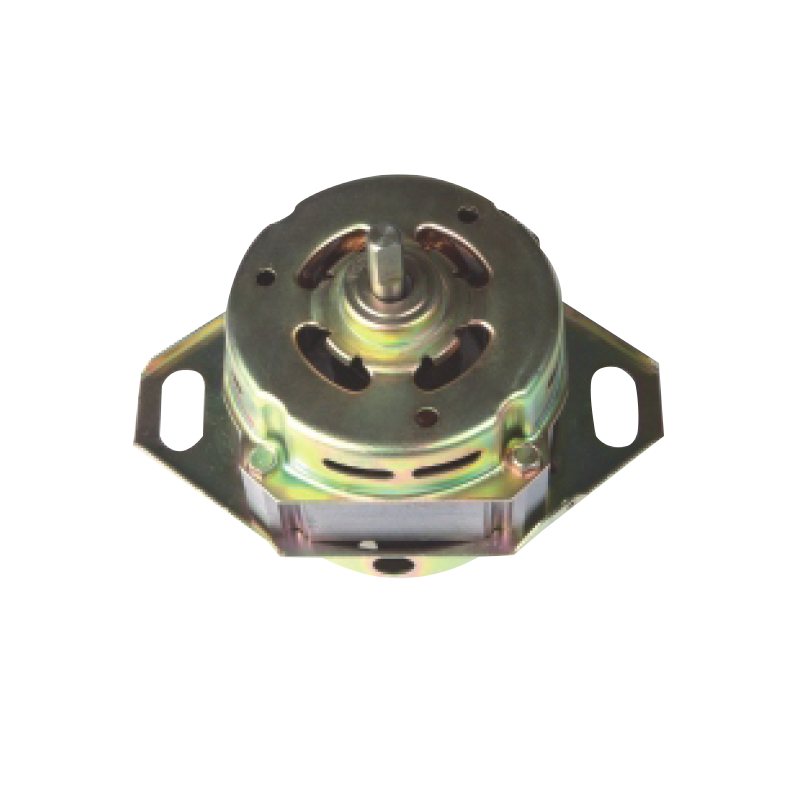
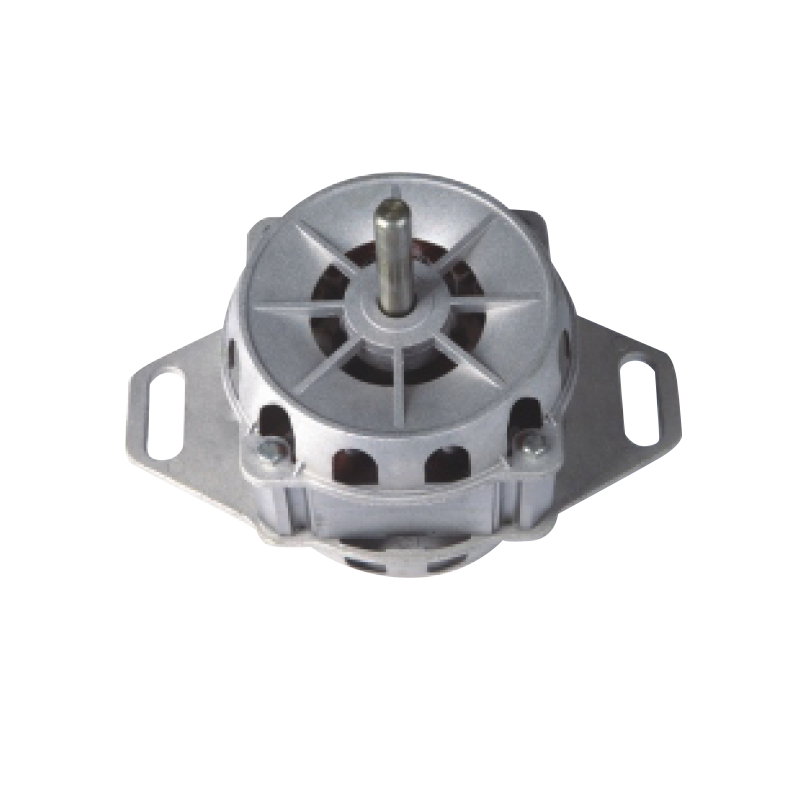
A washing-machine motor is not selected by wattage alone. Two machines with the same nominal laundry capacity can demand different torque, acceleration, thermal endurance and controls because the drum geometry, transmission, wash program and spin strategy are different. For an appliance OEM, the correct comparison starts with a measured load profile and ends with an integrated-machine validation plan.
Start with the Washer Architecture, Not the Motor Catalogue
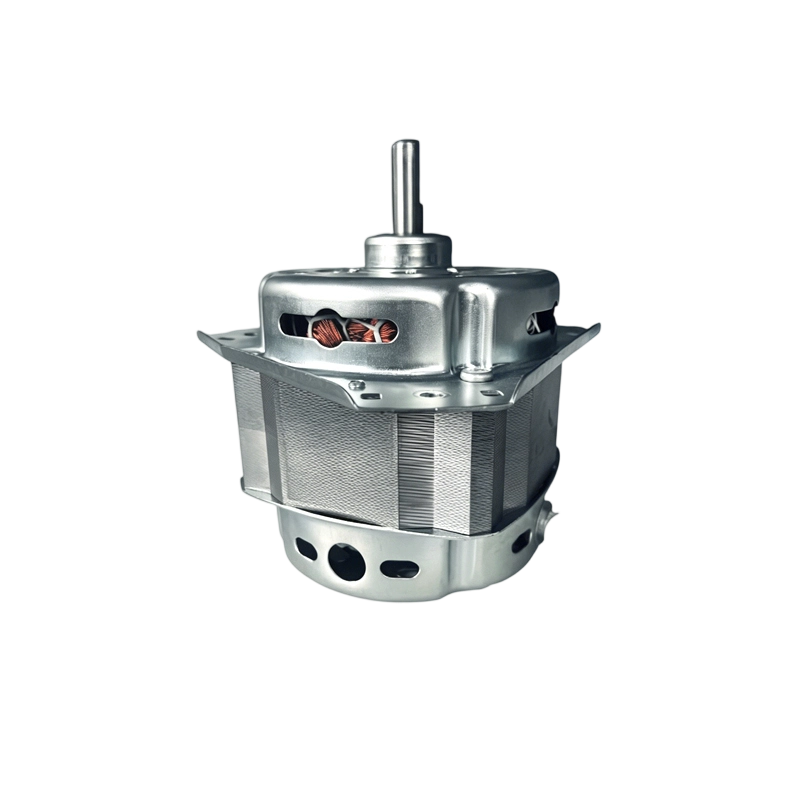
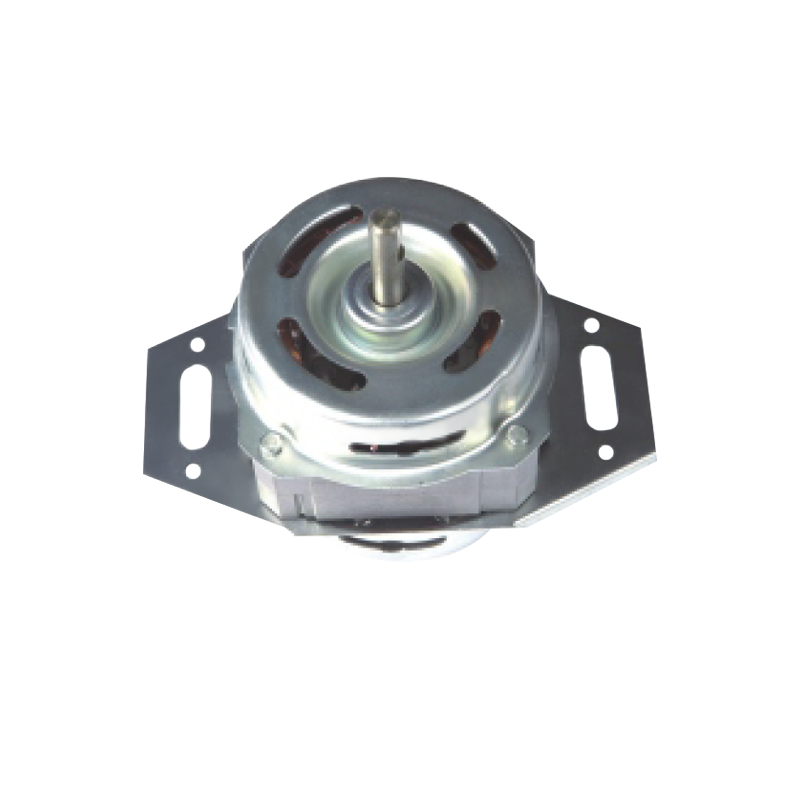
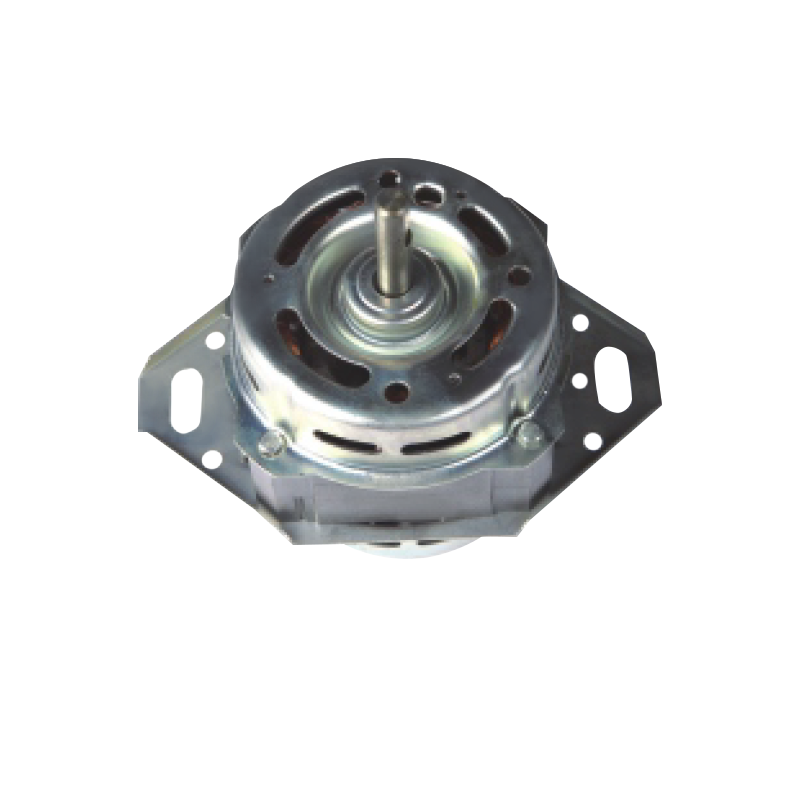
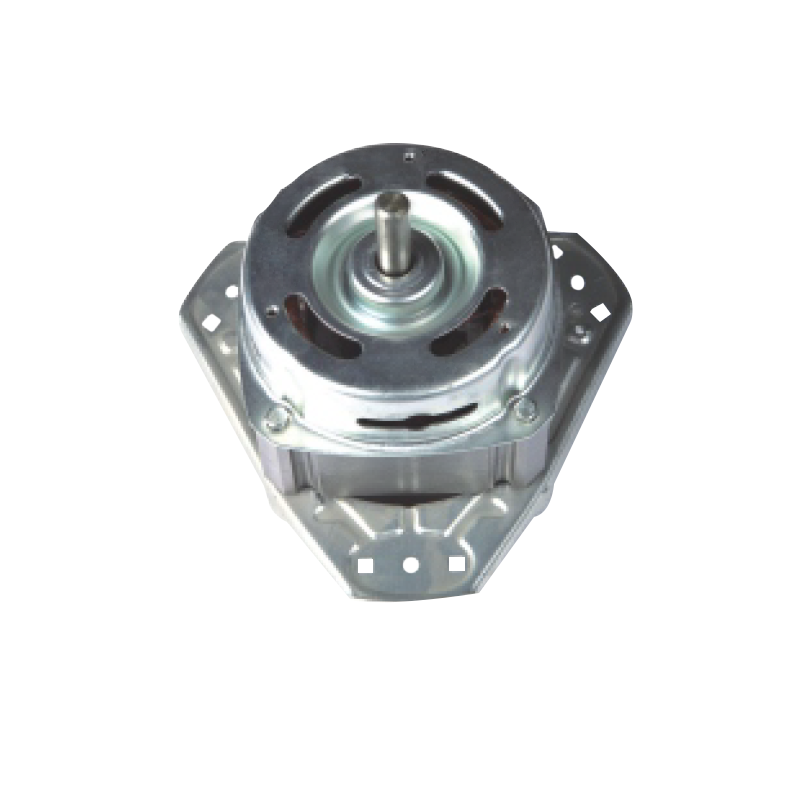
A twin-tub washer commonly assigns agitation and spin extraction to separate mechanisms. A front-loading drum washer must reverse repeatedly at low speed, distribute laundry before spin, accelerate through structural resonances and manage unbalanced loads. An impeller-based top-loader imposes another torque profile, especially when the wash action alternates direction frequently. These differences can make the same nominal motor rating suitable for one appliance but inappropriate for another.
The first engineering document should therefore describe the driven assembly: drum or pulsator dimensions, transmission ratio, total rotational inertia, operating speed bands, wash and spin duty cycles, expected textile loads and allowable start time. Specify whether the quoted speed refers to the motor shaft or the drum. Confusing the two can produce an apparently plausible but fundamentally incorrect selection.
| Architecture | Dominant motor challenge | Integration question |
|---|---|---|
| Twin-tub wash drive | Frequent starts and reversals | Can starting torque be repeated without excessive heating? |
| Separate spin drive | Acceleration and sustained extraction speed | How does the assembly behave with an uneven load? |
| Belt-driven drum | Motor torque multiplied through a pulley ratio | What are belt slip, tension and transmission losses? |
| Direct-drive drum | High torque at low drum speed | Can the motor and controller handle low-speed torque ripple? |
Translate the Wash Program into a Torque–Speed Envelope
The useful starting relation is mechanical power: P = T × ω, where P is watts, T is newton-metres and angular speed ω is radians per second. At rotational speed n in revolutions per minute, P = 2πnT/60. A motor supplying 2.0 N·m at 1,200 rpm delivers approximately 251 W of shaft power. That is a point on a torque–speed curve, not proof that a 251 W motor will start the appliance or survive its complete cycle.
Acceleration requires additional torque. For an idealized rigid rotating load, Tacc = Jα, with J the equivalent inertia at the shaft and α the angular acceleration. If equivalent inertia is 0.025 kg·m² and speed rises from rest to 1,200 rpm in 8 seconds, angular acceleration is about 15.7 rad/s² and inertial torque is about 0.39 N·m. Friction, water drag, laundry redistribution and transmission effects must be added separately. The numerical example is a mechanics calculation, not a measured washer duty point.
In a belt system, the inertia reflected to the motor shaft changes with the square of the speed ratio. A designer who uses drum inertia without reflecting it through the transmission may oversize or undersize the drive. Likewise, a direct-drive motor may run at a much lower rotational speed but must deliver torque directly at the drum. Comparing catalogue watts without shaft-speed context obscures this distinction.
Why Starting, Reversing and Spin-Up Matter More Than One Rated Point
Washing is a transient application. Reversals can demand torque while rotor speed crosses zero; spin-up can require prolonged acceleration; unbalance can force the controller to abort and restart. For this reason, continuous rated torque, short-duration peak torque, locked-rotor behavior and permissible starts per hour should be treated as different quantities.
A motor that appears efficient at one steady-state speed may spend much of a real wash program in low-speed or transient operation. The OEM should request a torque–speed curve and, for an electronically controlled drive, an efficiency map covering the operating region. An inverter's input losses also matter: motor-only efficiency and wall-plug drive-system efficiency are not interchangeable.
Control architecture changes the available options. A single-phase induction design may be attractive for simpler fixed-speed duties, whereas electronically commutated or permanent-magnet solutions enable more flexible speed control when the controller and sensing architecture support it. Universal motors can provide a wide speed range but introduce brush wear and commutation noise. The choice should follow the appliance's actual speed-control, service-life, acoustic and cost requirements rather than a generic AC-versus-DC label.
Calculate Energy at the Appliance Level
Suppose a wash segment needs an average 180 W of mechanical output for 25 minutes. At 70% combined motor-and-drive efficiency, electrical input is approximately 257 W and segment energy is 0.107 kWh. At 80% combined efficiency, input becomes 225 W and segment energy is 0.094 kWh. The difference is roughly 0.013 kWh for that segment. These numbers follow directly from the stated assumptions; they do not predict an entire washing machine's certified energy rating.
Why is the distinction important? A washer also consumes energy in pumps, electronics, water heating where fitted, and other operating phases. U.S. clothes-washer test procedures measure energy under prescribed appliance-level conditions and load selections rather than assigning a rating from the motor nameplate. The applicable procedure and regulatory edition must be checked for the market and compliance date. An OEM should avoid turning an isolated motor efficiency claim into an unsupported whole-appliance savings claim.
Design Around Thermal Reality, Not Only Ambient Temperature
Electrical losses become heat. In an enclosed cabinet, cooling depends on motor location, airflow, proximity to the tub, mounting surfaces and the pattern of intermittent operation. A bench test with open-air ventilation may underestimate temperature rise after repeated wash and spin cycles inside the actual housing.
Request winding-temperature data at the worst credible operating conditions, not just at one nominal point. A useful validation matrix includes low and high supply voltage, heavily loaded wash action, repeated reversals, maximum programmed spin speed and elevated ambient conditions relevant to the destination market. Temperature measurement method matters: resistance-based winding temperature estimates and embedded sensors do not necessarily report the same local temperature.
IEC 60034-1:2026 addresses rating and performance for rotating electrical machines, while IEC 60335-2-7:2024 addresses particular safety requirements for household washing machines. They serve different purposes. Passing a motor-level test does not by itself establish safety compliance of the finished washer; the appliance maker must validate the integrated design and applicable national deviations.
Mechanical and Acoustic Integration Can Overturn an Electrical Choice
Noise can originate in electromagnetic forces, bearings, belt interaction, fan airflow and the cabinet's own resonance. An isolated motor noise figure is difficult to compare unless the test specifies speed, load, microphone position, mounting and background conditions. For a variable-speed machine, narrow tonal peaks during acceleration may be more objectionable than a single average sound-pressure value suggests.
Mounting tolerances and alignment are similarly consequential. A belt-driven machine needs pulley alignment and a tension strategy that remain stable over service life. A direct-drive assembly places more importance on concentricity, rotor-to-stator clearance and the stiffness of the drum support. Excessive vibration is not automatically a motor defect: the root cause may be load distribution, suspension design or a structural mode in the cabinet.
Before releasing tooling, test the motor in a representative appliance assembly across the complete speed sweep. Record vibration and acoustic spectra, not only a pass/fail dB(A) figure. Correlate troublesome frequencies with rotational speed, mechanical orders and operating phases to distinguish a drive-related issue from the rest of the appliance.
Build a Prototype-to-Production Qualification Plan
The OEM and motor supplier should agree on what constitutes an approved configuration: electrical design, lamination stack, winding specification, bearings, shaft dimensions, insulation system, connector, controller interface and critical materials. A sample is meaningful only if it represents a configuration that can be reproduced in production.
Qualification should proceed in layers. First confirm electrical and mechanical interfaces, then test torque–speed behavior and temperature rise, then run complete wash cycles with representative loads. After design approval, evaluate samples from production-intent tooling and manufacturing processes. The transition is important because changes in winding tension, rotor balance, bearing fits or connector assembly can alter performance even when the nominal specification remains unchanged.
For a quotation, provide the motor supplier with the expected annual volume, supply voltage and frequency, motor or drum speed range, peak and continuous torque, duty profile, mounting drawing, environmental constraints, controller architecture, required validation evidence and target service life. Ask for a proposed verification plan tied to those requirements. This produces a more useful technical discussion than sending only a desired wattage and purchase quantity.
Final Selection: Compare Verified Operating Margins
A defensible OEM decision compares candidates on operating margin rather than headline specifications. Does each motor provide sufficient torque during acceleration? Does it stay within thermal limits through the most demanding cycle? Does the complete drive meet the acoustic target when installed? Can the supplier reproduce the approved design at production volume? These questions connect engineering risk with procurement risk.
For manufacturers developing multiple washer models, a motor platform may offer purchasing and validation economies, but shared components should not be forced across fundamentally different duty profiles. The right motor is the one whose measured operating envelope, controller, mechanical interfaces and production consistency fit the intended appliance—not simply the lowest-cost item with a matching nameplate power.