 English
 中文简体
中文简体
Two motors, two fundamentally different jobs
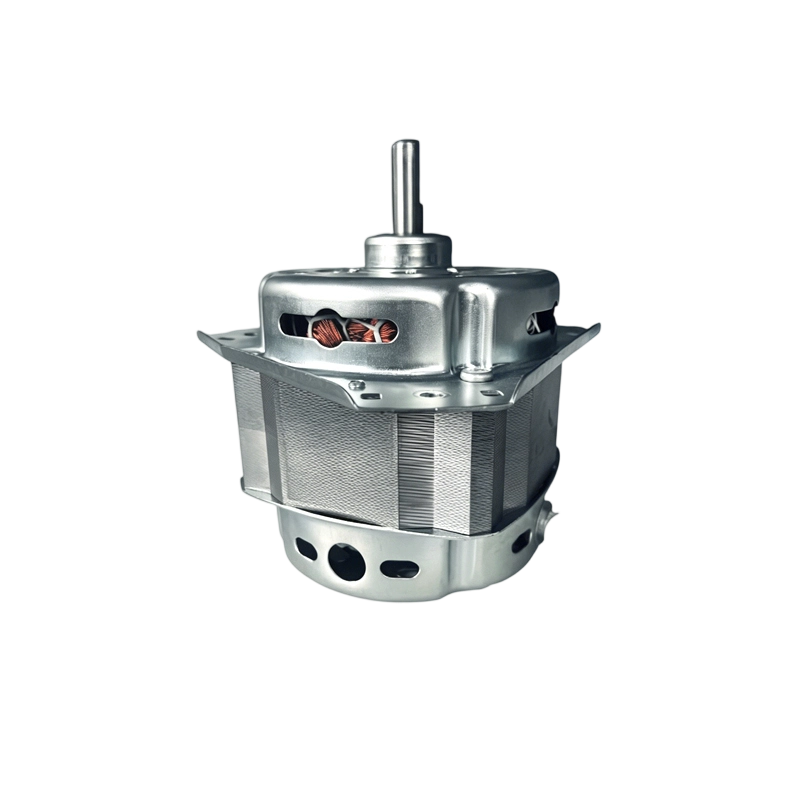
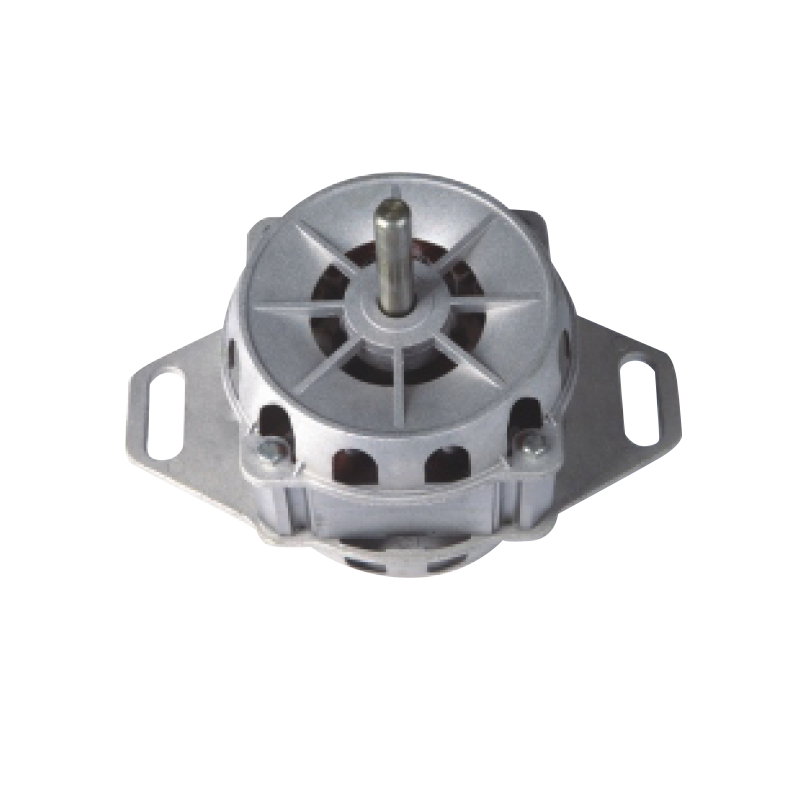
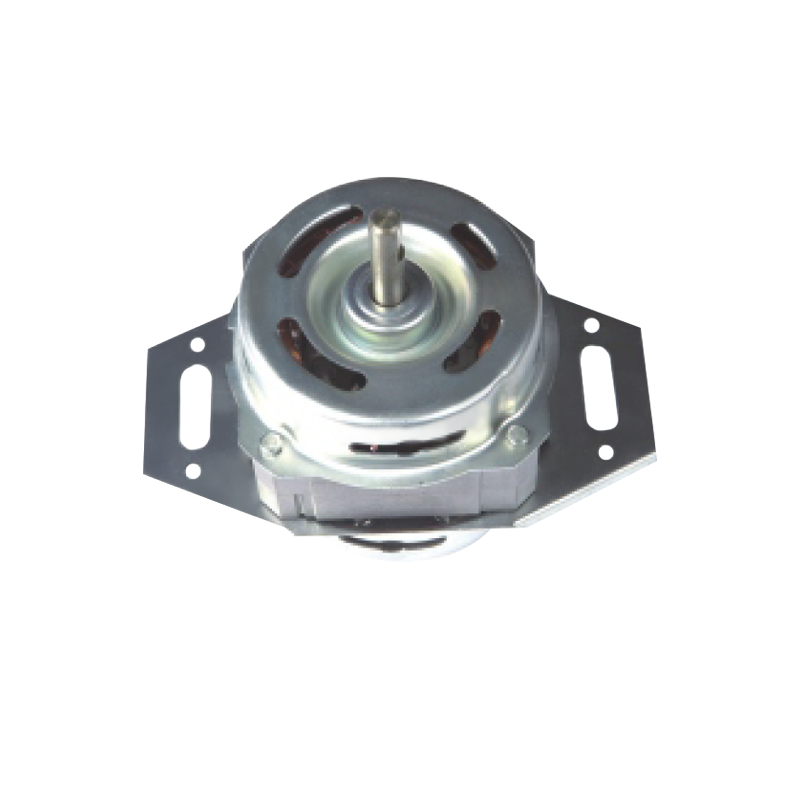
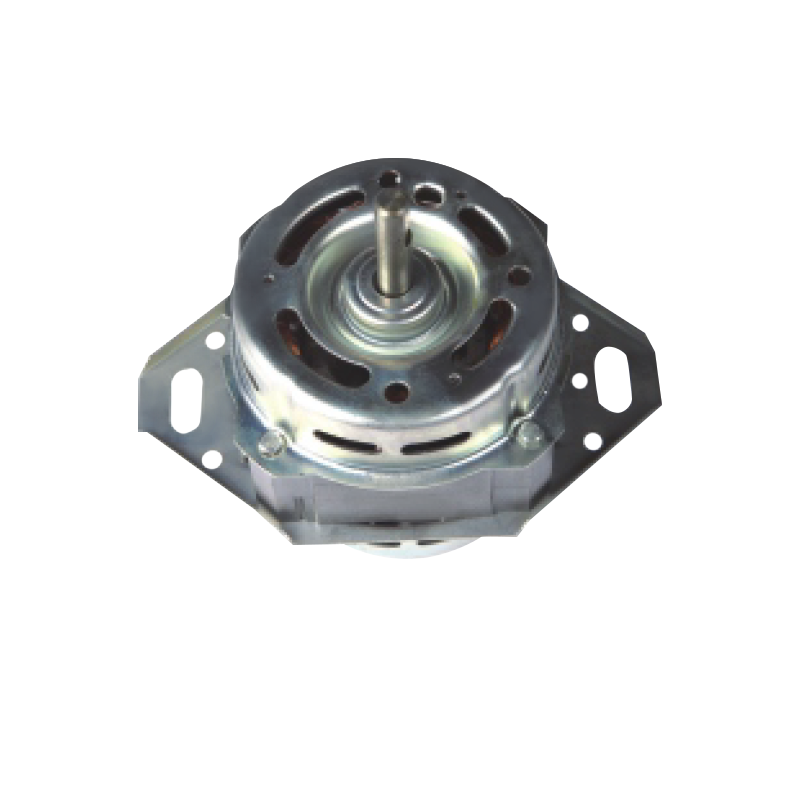
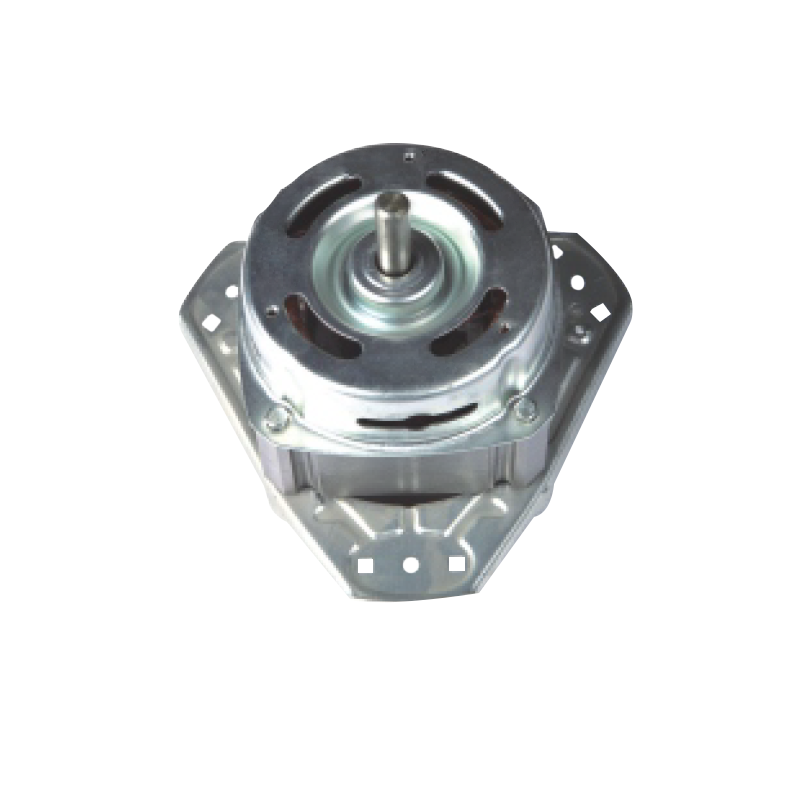
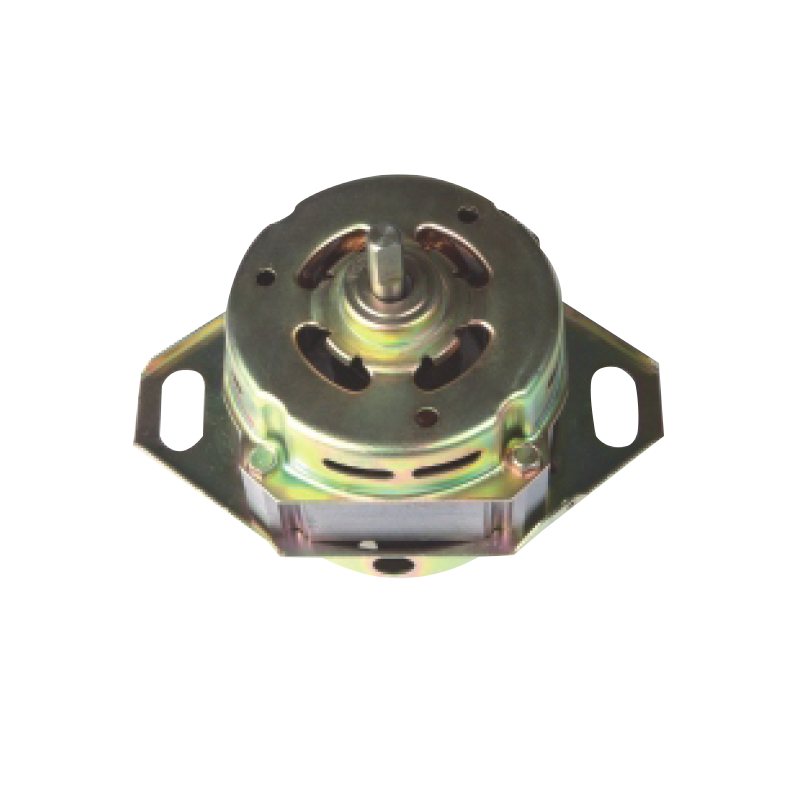
A twin-tub washer divides its mechanical work between an agitator or pulsator drive and a spin basket. The wash motor is asked to start, stop and reverse repeatedly while moving laundry through water. The spin motor is asked to accelerate a water-laden basket, maintain high rotational speed and tolerate an unevenly distributed load. Both may be single-phase induction machines, yet treating them as interchangeable because their nameplates show similar wattage is a design mistake. The defining requirement is the torque-versus-time profile at the actual shaft.
During washing, the pulsator periodically changes direction to loosen and circulate fabric. Reversal imposes transient current and heating; water resistance changes with fill level, textile type and fabric entanglement. During extraction, the basket typically rotates in one direction. Its initial acceleration is demanding, but the aerodynamic and bearing loads at steady speed are different from the short reversals of washing. A spin system also has a mechanical stability problem that a wash pulsator does not face in the same way: centrifugal force from eccentric wet laundry.
Read the duty cycle before reading the wattage
Consider an illustrative wash program with 8 seconds clockwise, 2 seconds stopped, 8 seconds counterclockwise and 2 seconds stopped. That is a 20-second sequence containing six powered starts per minute if each direction begins from rest. Over a 12-minute wash interval, the motor may experience 72 starting events. Actual controller timings vary by appliance, and some controllers use different reversal patterns for delicate or heavy fabrics. The important engineering point is that repetitive starts can dominate thermal stress even when average mechanical power looks modest.
Contrast a spin cycle that accelerates once, then holds speed for several minutes. A candidate motor may perform acceptably in a continuous bench test yet fail the wash reversal schedule because winding temperature climbs under repeated high-current starts. Conversely, a wash motor optimized for intermittent reversal may not provide the speed stability or mechanical interface expected in a spin basket assembly.
| Design question | Wash drive | Spin drive |
|---|---|---|
| Primary load | Pulsator, water and fabrics | Rotating basket and wet laundry |
| Typical control behavior | Frequent reversal and pauses | One-direction acceleration and hold |
| Dominant transient | Repeated starting and reversing | Initial acceleration and unbalance |
| Validation focus | Start count, winding heat, reversal performance | Spin-up time, vibration, braking and containment |
Why inertia changes the starting requirement
Rotational acceleration torque follows T = J × α, where J is the combined rotational inertia referred to the driven shaft and α is angular acceleration. If an illustrative spin basket has an effective inertia of 0.12 kg·m² and reaches 700 rpm in 15 seconds, angular acceleration is approximately (700 × 2π/60)/15 = 4.89 rad/s². The inertia-related torque is therefore 0.59 N·m before adding bearing drag, water movement, belt losses and any transient resistance. This calculation is deliberately made at the basket; the motor-shaft requirement depends on the transmission ratio and efficiency.
For a pulsator, inertia alone often underestimates demand. Water and clothing produce a strongly nonlinear resisting torque. An empty-tub spin-up result is not a substitute for testing with wet textiles. Engineers should capture current, shaft speed and temperature during the actual program, including maximum specified load and realistic water levels. A single nominal torque value cannot represent the full duty cycle.
Capacitors, auxiliary windings and directional operation
Many economical twin-tub designs use capacitor-equipped single-phase induction motors. A phase-shifted auxiliary winding helps produce a rotating field and starting torque. The exact circuit may use a permanent run capacitor, a start capacitor arrangement or a different motor topology; these should not be treated as electrically identical. Direction reversal in a suitable single-phase design is commonly accomplished by changing the relative connections of the main and auxiliary winding circuits, subject to the motor's specified wiring scheme.
The capacitor is a functional part of the drive, not an interchangeable accessory. Incorrect capacitance can alter starting torque, current and temperature. Voltage rating, dielectric type, ambient temperature and duty rating also matter. When evaluating a replacement wash motor, compare the wiring diagram, capacitor specification and rotation behavior under load rather than matching only the frame and nominal power. A spin motor may use a different starting arrangement or mechanical brake integration.
Thermal behavior: the hidden difference
Motor heating is linked to current squared times winding resistance. If current rises to twice its running value during a start, instantaneous copper loss in that winding can approach four times the running-loss level, before accounting for temperature-dependent resistance and other losses. The duration of each event matters, as does cooling between events. Repeated starts can create a higher winding hot spot than a smooth, longer-duration operating interval with comparable average output.
Use resistance-based temperature assessment or appropriately installed sensors to check the full wash sequence. For spin, capture temperature during acceleration and the highest permitted continuous-speed interval. Measurements should include the expected low- and high-voltage supply limits, because low voltage can reduce available induction-motor starting torque while high voltage may increase magnetic losses. The allowable temperature rise must be evaluated against the actual insulation system and applicable motor or appliance requirements, not a generic temperature printed in a marketing table.
Transmission geometry and practical installation
A belt or gearbox changes the relationship between motor speed and pulsator speed. If the motor pulley is 50 mm and the driven pulley 150 mm, the ideal speed reduction is 3:1. A 1,350 rpm motor would drive the larger pulley near 450 rpm before slip. The ideal driven-shaft torque is multiplied by three; actual torque is reduced by transmission losses. The pulley ratio is therefore part of the motor selection, not merely a packaging decision.
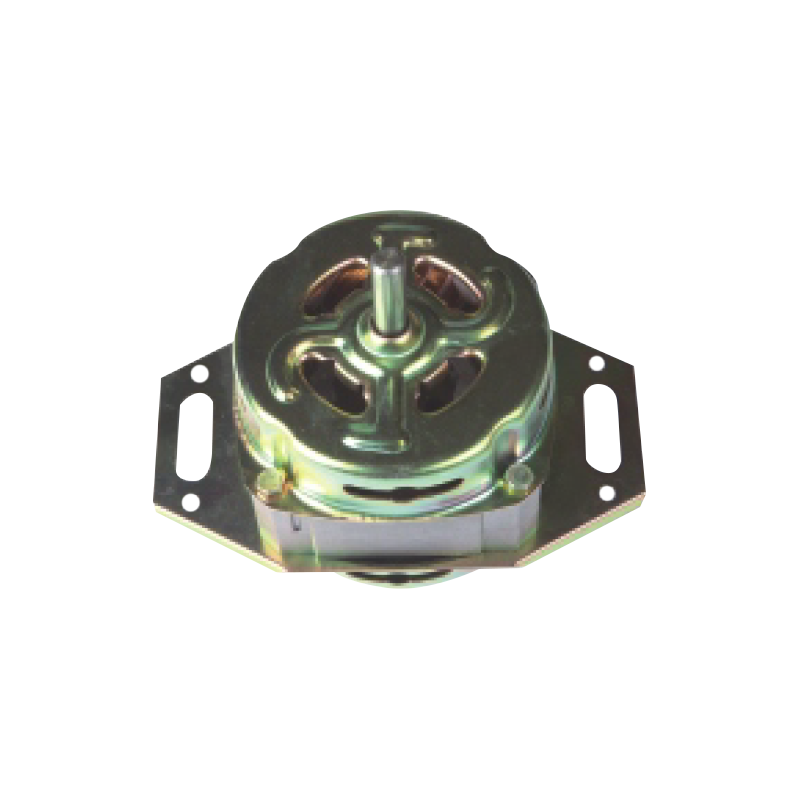
Spin assemblies may have a clutch, coupling or brake that changes the torque path. Engineers should inspect shaft diameter, keying or flats, mounting-hole spacing, pulley alignment, bearing support and sealing against splashed water. A mechanically compatible motor can still produce excessive belt tension or misalignment. Those forces shorten bearing life and may generate noise that is incorrectly blamed on the motor's electromagnetic design.
Failure diagnosis must follow the load path
A wash tub that hums but does not turn can indicate a failed capacitor, seized pulsator, obstructed gearbox, incorrect wiring or insufficient starting torque. A spin basket that accelerates slowly may involve a slipping clutch, wet-load imbalance, dragging brake, capacitor degradation or weak motor output. Diagnosing either symptom from motor current alone is risky because a blocked load and an electrical fault can create overlapping signatures.
For a twin-tub appliance development program, specify two separate validation sequences: a worst-case wash reversal test and a wet-load spin-up test. Record supply voltage, capacitor value, load preparation, current trace, speed trace, winding temperature and vibration. The purchase decision then becomes evidence-based: each motor is qualified for its own duty rather than selected from a common wattage catalog.
What the OEM should put on the drawing
The wash-motor drawing should identify required rotation directions, start frequency, pulsator load, operating sequence, capacitor and connection diagram. The spin-motor drawing should define basket inertia, speed target, acceleration time, mechanical coupling, allowable vibration and braking interface where applicable. Both need dimensional and environmental requirements. This separation prevents a common procurement error: using one generic specification for two motors whose electrical ratings may look similar but whose real workloads are not.
The practical conclusion is straightforward. A wash motor is judged by repeated directional performance and thermal resilience; a spin motor is judged by acceleration, sustained rotation and dynamic stability. The right comparison is made at the installed shaft under representative laundry conditions, not by comparing nameplate power alone.