
 English
 中文简体

Industry News
SP Sprayer Pump Gearboxes: Fork Selector Speed Variation & Flange Mounting
Orchard sprayers rely on a carefully matched transmission chain: the tractor PTO supplies power, the pump builds pressure, and the gearbox controls how that power reaches the pump. For orchard applications, two design details often determine whether the sprayer is easy to operate and service: fork selector speed variation and flange mounting. The ND SP series sprayer pump gearboxes are built around these requirements, giving equipment builders and orchard operators a focused transmission solution for spraying duties.
This article explains how the SP series fits into orchard irrigation and spraying systems, how a fork selector changes pump speed, why flange mounting supports alignment, and how to compare SP112, SP113 and SP90 gearboxes for orchard sprayers.
Content
- 1 Why SP Series Sprayer Pump Gearboxes Matter in Orchards
- 2 How Fork Selector Speed Variation Works
- 3 Flange Mounting: Alignment, Rigidity and Service Access
- 4 Matching the Right SP Gearbox to an Orchard Sprayer
- 5 Installation and Maintenance Checklist
- 6 Frequently Asked Questions About SP Series Sprayer Pump Gearboxes
Why SP Series Sprayer Pump Gearboxes Matter in Orchards
An orchard sprayer does more than move liquid. It must maintain a stable pump speed while the operator adjusts to tree spacing, row ends, canopy density and cleaning or transport needs. If the pump speed is poorly matched to the sprayer, coverage can become uneven, pressure control can feel inconsistent, and the drive system may experience unnecessary vibration or wear.
SP series gearboxes are application-specific rather than general-purpose units. Their task is to transmit PTO power to a sprayer pump through a compact housing, an appropriate shaft arrangement and a mounting interface that suits the sprayer frame or pump flange. In orchards, the gearbox also needs to tolerate dust, moisture, vibration and seasonal use cycles.
Two features are especially valuable in this environment:
- Speed variation by fork selector: allows the operator to select a different pump speed range without changing the tractor PTO speed.
- Flange mounting: provides a rigid, aligned connection between the gearbox and the pump or machine structure, reducing reliance on separate alignment hardware.
For machine builders, these details simplify integration. For end users, they can make daily operation and maintenance more predictable.
How Fork Selector Speed Variation Works
A fork selector is a mechanical shifting mechanism. Inside the gearbox, a shift fork moves a sliding gear, dog clutch or comparable engagement element along a shaft. When the operator moves the control, the fork positions the moving part so that a different gear pair becomes active. The result is a change in the output speed relative to the input speed, while the tractor PTO can remain at its normal working speed.
This arrangement is useful on orchard sprayers because the pump often has more than one operating condition. Field spraying may require one pump speed for a target pressure and flow, while tank rinsing, transfer or travel may benefit from a different speed. A fork-operated change gives the operator a direct mechanical way to move between available settings without swapping pulleys or altering the PTO drive.
A fork selector also has a practical service advantage: the shifting mechanism is contained in the gearbox, so the machine layout stays compact. However, correct operation matters. Operators should follow the manufacturer’s instructions for shifting, especially regarding machine stop conditions, engagement feel and verification that the selected position is fully engaged before load is applied.
For sprayer machines that need this kind of on-machine speed selection, the ND SP113 shiftable-speed gearbox with fork is designed around the task.
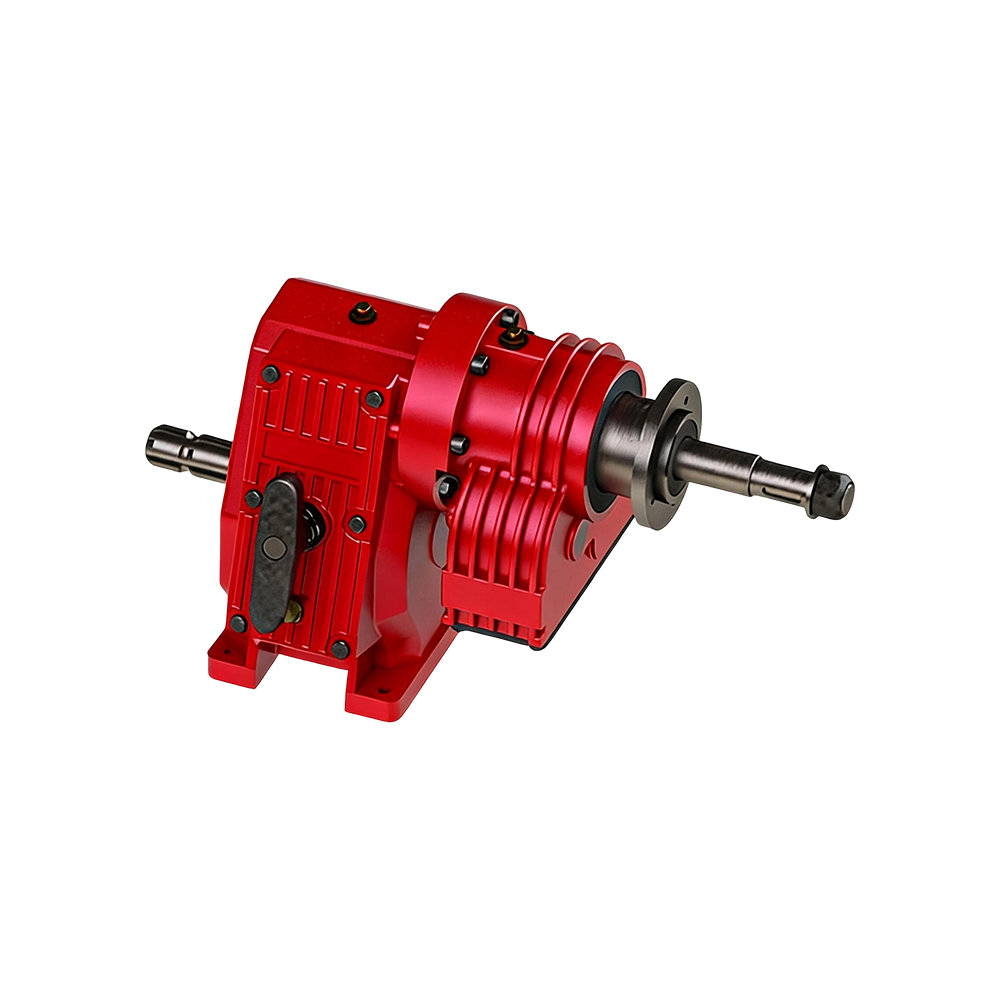 ND SP113 Shiftable-Speed Sprayer Gearbox with ForkOn-machine speed selection for sprayers, with a fork assembly, multi-speed gearing, sealed housing and wear-resistant gears; verify shaft and control details.View Product →
When specifying a fork-selector gearbox, confirm the input shaft, output interface, available speed positions and control arrangement against the sprayer’s pump and frame. The goal is not simply to add a shifting feature, but to make the selected pump speed repeatable and safe under orchard work cycles.
Flange Mounting: Alignment, Rigidity and Service Access
Flange mounting uses a machined mounting face to connect the gearbox directly to a matching pump flange, bracket or machine frame. Compared with a layout that depends on separate pillow blocks, long shafts or adjustable tensioners, a flange interface can provide a more rigid and better-aligned connection. That matters because misalignment in a pump drive can show up as vibration, seal stress, bearing load or premature coupling wear.
In orchard sprayers, the mounting arrangement also affects service access. A well-designed flange mount keeps the gearbox close to the pump, shortens the driveline and makes it easier to remove the pump or gearbox for inspection. The mounting face and pilot diameter help locate the unit, while bolts hold it in place. During installation, the flange faces should be clean and free of burrs, the fasteners should be tightened evenly, and the shaft engagement should be checked before the sprayer is run.
An optional flange mount is valuable for equipment builders because it allows the same gearbox family to suit different sprayer pump interfaces. Instead of forcing every sprayer to use one frame layout, the builder can select the flange configuration that matches the pump and market requirement.
The ND SP112 optional flange mount gearbox for orchard sprayers reflects this approach, giving designers a flange-mounted option for pump drive integration.
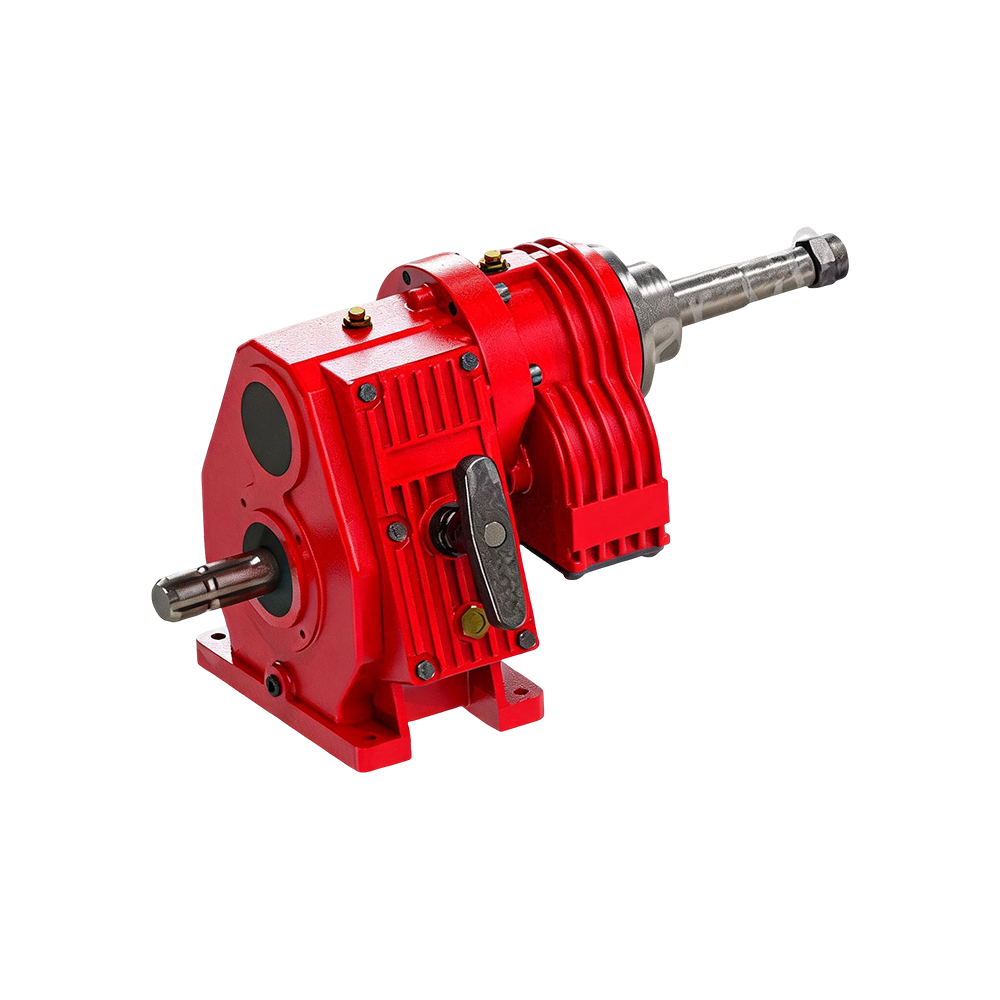 ND SP112 Flange-Mount Gearbox for Orchard SprayersOptional flange mounting for orchard sprayer pump drives, with compact body, anti-corrosion surface and standard interfaces; confirm bolt pattern, pilot fit and load.View Product →
Flange mounting is not a substitute for correct specification. The builder still needs to verify the bolt pattern, pilot fit, shaft type, rotation and load profile. When these details are correct, however, the flange connection can support smoother operation and more confident maintenance.
Matching the Right SP Gearbox to an Orchard Sprayer
Selecting an SP series gearbox starts with the sprayer’s pump and installation envelope. The gearbox must connect the PTO input to the pump input correctly, fit the available space, and provide the speed control the operator needs. A useful selection process covers the following points:
- Confirm the pump input shaft, flange pattern and required rotation.
- Check the tractor PTO speed and the pump speed range needed for spraying, rinsing and transfer.
- Decide whether fork selector speed variation is required or whether a fixed drive is sufficient.
- Review the mounting method: flange mount, frame mount or another interface.
- Allow access for lubrication, inspection and fastener tightening.
- Verify the gearbox rating and duty cycle with the supplier before production or replacement use.
The table below summarizes the focus of three SP series options for orchard sprayer applications. It is a selection guide, not a substitute for confirming the exact pump and machine interface.
| Model | Design Focus | Typical Orchard Fit | Selection Check |
|---|---|---|---|
| SP112 | Optional flange mount | Orchard sprayers that benefit from a direct flange connection to the pump or frame | Flange pattern, pilot fit, shaft engagement |
| SP113 | Shiftable speed with fork | Sprayer machines that need mechanical speed selection for different pump duties | Speed positions, control layout, shift procedure |
| SP90 | Shift fork for orchard pesticide sprayers | Orchard pesticide sprayers using a fork-operated pump drive | Pump interface, PTO input, operating access |
For orchard pesticide sprayers that rely on a fork-operated speed change, the ND SP90 gearbox with shift fork is a focused option within the SP family.
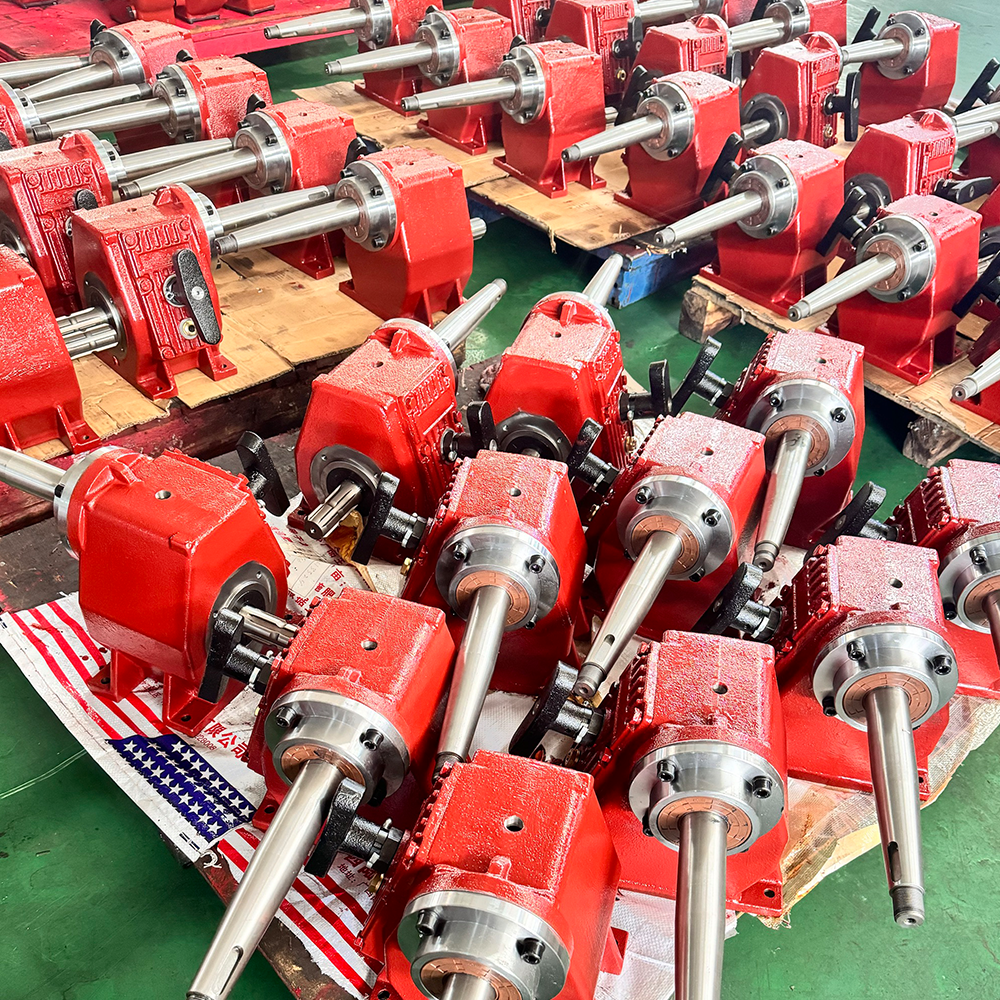 ND SP90 Shift-Fork Gearbox for Orchard Pesticide SprayersFork-operated speed adjustment for compact orchard sprayers, with chemical-resistant housing, smooth shifting and optimized shaft structure; match pump, mounting and routine.View Product →
In practice, the best choice is the one that matches the sprayer’s pump, mounting structure and operating routine. A gearbox with extra features that do not fit the machine can create installation problems, while a simple unit that matches the duty can be easier to maintain.
Installation and Maintenance Checklist
Correct installation protects both the gearbox and the pump. Before commissioning, inspect the mounting flange and shaft for cleanliness, burrs or shipping damage. Confirm that the gearbox is seated correctly, that fasteners are tightened in a controlled sequence, and that the input and output connections are fully engaged. Check that the shift fork moves through its positions smoothly and that the selected position is clearly engaged.
During routine service, focus on the details that affect reliability:
- Check lubricant level and condition according to the service schedule.
- Inspect seals and flange joints for weeping or contamination.
- Verify flange bolt tightness and mounting integrity.
- Test the fork selector for full engagement and smooth movement.
- Watch for abnormal vibration, noise or temperature rise during operation.
- Keep the gearbox exterior clean so that inspection points remain visible.
Because orchard sprayers often operate in dusty and wet conditions, maintenance should include cleaning around the breather, seals and shift mechanism. If the gearbox is being fitted to a new sprayer design, review the installation with the supplier before commissioning; you can discuss your orchard sprayer requirements with the ND team.
Frequently Asked Questions About SP Series Sprayer Pump Gearboxes
Q1: What is fork selector speed variation in an SP sprayer pump gearbox?
It is a mechanical shifting system in which a fork moves an engagement element to select a different gear ratio or drive position. This changes the pump speed relative to the PTO input, allowing the operator to match the sprayer to different working conditions without changing the tractor PTO speed.
Q2: Why choose flange mounting for an orchard sprayer gearbox?
Flange mounting provides a rigid and located connection between the gearbox and the pump or machine frame. It can improve alignment, reduce dependence on separate coupling adjustments and make service access more straightforward when the flange pattern and pilot fit are correct.
Q3: How do I choose between SP112, SP113 and SP90?
Start with the pump interface and the required speed control. SP112 is focused on optional flange mounting for orchard sprayers, SP113 provides shiftable speed with a fork for sprayer machines, and SP90 is configured with a shift fork for orchard pesticide sprayers. Confirm shaft, flange, rotation and PTO details before ordering.
Q4: What should I check during maintenance?
Check lubricant condition, seal integrity, flange bolt tightness and the shift fork mechanism. Also monitor vibration, noise and temperature during operation. Follow the gearbox service instructions and keep the mounting area clean so that inspection is reliable.
SP series sprayer pump gearboxes are most effective when the transmission is matched to the pump, the mounting structure and the operator’s speed-control needs. Fork selector speed variation supports mechanical pump-speed changes, while flange mounting supports stable alignment and service access. For orchard sprayers, those two details can make the difference between a transmission that merely fits and one that supports consistent spraying season after season.
ND application-specific gearboxes are developed for agricultural machinery duties, including orchard spraying, irrigation and other transmission applications. Review the pump interface, PTO input, flange pattern and operating routine before selecting an SP112, SP113 or SP90 unit for a new build or replacement project.
No.6 Wuyashan Road, Langxi Economic Development Zone, Xuancheng City, Anhui, China
+86-563-7370081
